culture & society, media presence
Over a Kölsch with Ines Imdahl
Ines Imdahl
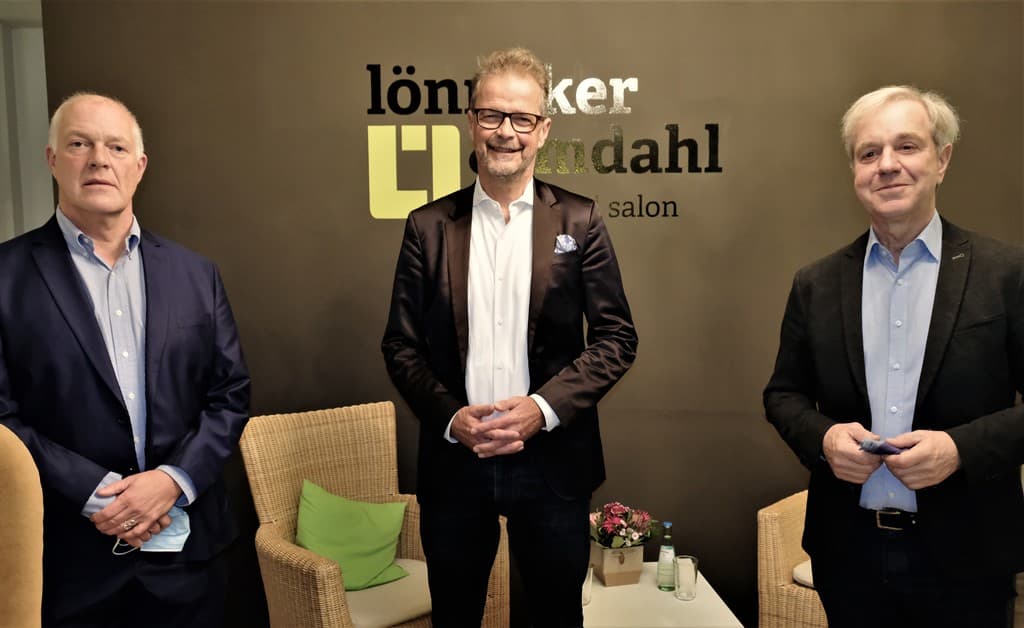
In his well-known series 'AUF' N KÖLSCH', Marcellino Hudalla asks Ines Imdahl his infamous 13 innocent questions.
You can read the original article and the interview here – or directly here in the wording:
I meet a bright graduate psychologist who actually manages to reconcile professional success and a large family with four children of her own without any damage. In addition, she is attractive, attentive and hands-on ... wow! A few links to Ines Imdahl's vita at the end of the interview.
First of all, I have to realize ... psychology is not psychiatry. Psychiatry is a medical discipline of mental healing. Psychology, on the other hand, is the science of human experience and behavior. This very broad definition includes everything that man is, thinks, feels and expresses in his actions.
But what the hell is a depth psychologist then ...? The central idea of depth psychology is that "beneath the surface" of consciousness in the deep layers of the psyche, there are other, unconscious processes taking place that strongly influence conscious mental life (Wikipedia).
Ms. Imdahl, does the world need depth psychology ...?
Yes, absolutely! The world needs depth psychology. An elementary question is, for example, why do people do things even though they know they are harmful, such as smoking. The obvious contradiction of human action has always fascinated me. I want to understand it, to get to the bottom of things. Because that is the lever to get people to behave differently – to live healthier lives, to act in a climate-friendly way, etc.
Do you have to understand everything ...?!
No, you don't have to. But the companies, associations and institutions that commission us, the rheingold salon, cannot get any further with conventional approaches. We help them to better understand their customers and, on this basis, to jointly develop suitable communication concepts, products or services. Those that really reach people, move them and that they trust.
What is more revealing for you: actions or words ...?
We don't make forecasts, we explore the why. For example, 51 percent of people who buy cheap meat in discount stores are against factory farming. But when they stand in front of the meat, their mouths water and they take it with them instead of thinking: the poor animal... we are interested in the deeds, so we observe very closely. But we also have to ask and find out what really drives people. That's what we do. We listen to them for hours.
Everyone likes to talk, but doing and implementing falls by the wayside ...
Yes, that is indeed often the case. But that shouldn't stop anyone from simply getting started and setting a good example. Small steps are enough, there will always be resistance, you shouldn't let that stop you from doing things. And who actually determines that you always have to be one hundred percent in agreement in order to act? Classic example: Hardly anyone wanted to pay for plastic bags. 80 percent were against it. Now even 70 percent are in favor. What does that teach us? You can change opinions through action. Yes, you really can!
City of Cologne in a disaster of action, how do you help as much as possible, 1, 2, 3 ...
No, 1, 2, 3 doesn't work, there's no magic formula. Change is exhausting and hurts. It has to hurt too. Depth psychology can help to understand that to some extent. Superstar in three months, that actually works, but it has no substance at all. No, change is a marathon, not a sprint. It is painful, it is not free. In short: nothing that has developed over many years can be moved sustainably like this, 1, 2, 3. Neither in the city of Cologne nor in climate protection. But we have to start now, today and immediately: every single step counts.
How do psychologists raise their children?
Like everyone else – nonsense! (laughs). My husband and I are both psychologists. That has advantages and disadvantages, like any parental profession. We are certainly a bit stricter than others, we question a lot. Of course, we also argue sometimes. But the children notice that we don't let up. That is very important, this follow-up, in education as well as in the work in our office. An order without a follow-up goes wrong. In politics anyway. My daughter, just 16, says in retrospect today: "many things are easier for me than for others who were always allowed to do everything, but now hardly get anything done." Obviously we did something right.
Supporting and encouraging – good or does it hinder development?
Many parents make it too easy for their children, take too much off their hands: looking for an apartment, arranging an internship, calling the dentist. It's even worse with young employees: never enough free time, never enough vacation. They are not high performers after a year, but they are already changing jobs, getting promoted directly, getting more salary and thinking they can do everything. But they have never suffered anything. You don't develop without suffering. Anyone who takes care of children like this prevents young people from becoming adults.
Cell phone ringing during a meal together?
No way! No cell phones at our table, no newspapers, no TVs, no books, no media. Hard to keep up, but we have crystal-clear rules: all cell phones go to the shared charging station when we sit together at the table. And in the evenings: from 10 p.m., all cell phones go back to the charging station. No cell phone in bed – I recommend that to all parents – the children sleep through without WhatsApp. We parents stick to it too.
Women and the part-time trap ...
The classic model is that the woman stays at home after the birth because HE can't do it. Who says that anyway? The woman then takes a part-time job, which often equals a full-time workload, and her employer is happy. And the next full-time job awaits at home: children and household, because the man works full-time. Couples should either both work full-time and also share children and household. Or both go part-time. Today, employees have a lot of power: if couples clearly say that we both take care of job, family and children, companies have to adapt to that. Also for single parents. A law is needed that care work is well paid even in their own families. Automatically there would be less poverty in old age, especially among women.
Can AI help with this? Who will suffer?
Why shouldn't a care robot take on care tasks? It can do many things easier, faster, works 24 hours a day without a break. AI can also help us to do quantitative things extremely quickly, texts, numbers and calculations and stuff like that. So it will probably hit lawyers, tax consultants, authors and also market researchers first. AI will turn our world completely upside down. Similarly extreme as the industrial revolution around 1850. Therefore: We need rules quickly so that AI cannot develop freely in an uncontrolled way. It's a little scary, isn't it? Not to forget: Who can control all this?! Maybe a consolation: AI probably won't be able to fix a toilet so quickly. (laughs)
And how do you classify AI psychologically ...
One thing you shouldn't underestimate is touch. Touch is elementary. We need three hugs a day to survive, six hugs to live and twelve hugs to grow. It is still completely unimaginable that AI will be able to do that.
Speaking of touching – your favorite topic, Carnival. Does Carnival also need rules ...?
We already have rules, for example, that we participate, that we dress up, hook up and sway, sing along to the songs, etcetera. Are these already rules or do you just do it? Anyway, if you stick to it, the carnival actually works very well and without any problems. There must definitely be no room for uncontrolled binge drinking and ballermann-like shoving. This is the only way we can maintain this great indescribable feeling of community in Cologne's Carnival – and I'm already raving again!
Are you a real Kölsche Mädche ...?
In my heart I am a real Kölsche Mädche. Although I have only been in Cologne since I was 19, I have given birth to all four of my children here. Surely I have really earned the right to be recognized as a Kölsche Mädche. Don't you think so too?
What do you find particularly worth living for in Cologne?
Above all, the music on the streets inspires me and in general: the people dance here, they have joie de vivre in their blood, it is simply unique. There is its own Kölsch music, also many young up-and-coming bands – all of this is great. A few more female bands would be great, but that will surely come.
What should get better quickly in Cologne?
I see a lot of potential for optimization in traffic. More bike paths and trams would be great and above all more paths for pedestrians. There is currently an exciting new study that shows that people in Cologne feel most unsafe when they are walking! So there is still a lot to do.
Cologne stands for openness and casualness. Blessing or curse?
For me definitely a blessing. I come from a small village, personal freedom was a foreign word there. That is completely different in Cologne. The downside of Cologne, however, is: we are open, casual and flexible, but unfortunately that does not mean that we move much.
Where would you most like to live, if not in Cologne?
It's hard for me to say permanently. I like Hamburg and New York, also Havana, but permanently? If it has to be Germany, then definitely Hamburg.
Pure relaxation means for you?
Relaxation is quite rare in my life. I have a company and four children, so there is always a lot to do. I can relax while reading, with a massage, with a little sun and maybe with a glass of white wine in the evening.
Menu or plate dish?
Both. With the children plate dish, of course. And if there is time on the weekend, I also like a menu, but more than 3 courses is not necessary. The 10-course time is somehow over. A great third option: My husband cooks 😉
Hand on heart: What makes you really weak?
At the carnival. I get restless days in advance, I'm drawn out, especially to the street. Meetings are not my thing. I don't have to drink much either, I'm all about the music, the people, the swaying and just having fun. That's when I get really weak.
The greatest happiness of your life is?
Apart from husband and children? That people pay me for the only thing I can do and that is psychology. I can't do anything else.
You have one wish free – what do you choose?
I would like to be able to do magic. I don't understand at all how you can wish for something else!
You have to quit your job today, what would you do after that?
Exactly the same: psychology. I could then write books about psychology, perhaps with more social media support.
What do you wish for 2024?
That a really strong signal goes out into the world from the climate conference, without the smallest common denominator. We will not achieve the 1.5 degree target, that is already clear and at 3 degrees 70 to 80 percent of the earth is no longer habitable for us humans. Time is running out.
What Jeckes at the end: Suppose Cologne was broke. The only salvation: the cathedral has to be completely pink. The whole world comes to see it. Cologne becomes rich. All problems are completely gone! Would you be for or against it?
What a funny idea. I've never been against pink! And of course I would be in favor, because if we are so rich, then we could make the cathedral the way it once was again!