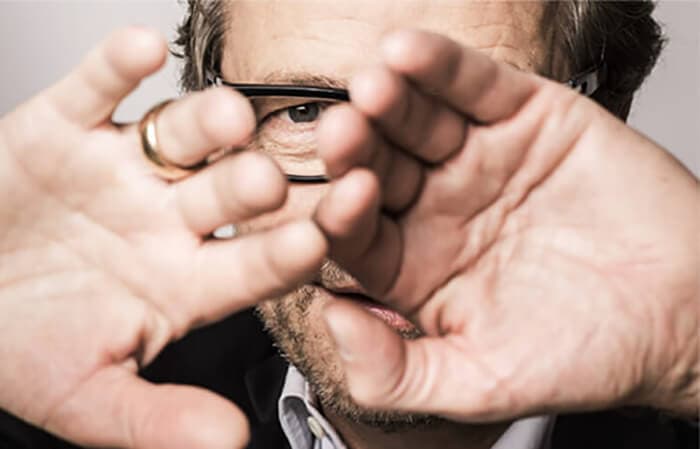
„Is the pillory coming back?“
Jens Lönneker
So headlined the "Wetzlarer Neue Zeitung" in the series "Living Democracy!" the interview with Jens Lönneker on the subject of credibility. The question is: If emotions become truth, is democracy in danger? And who is responsible for these developments? The politicians, the press, the journalists? Read the interview on our topic "Pröfffentlichkeit" or when private and public coincide.
Anyone who shows tears is often considered more credible than someone who comes up with facts. But if emotions become truth, is democracy in danger? Not necessarily, says Jens Lönneker, Managing Director of rheingold salon.
Iris Baar: Mr. Lönneker, homemade gallows for politicians, "lying press" calls at demonstrations. What have politicians and journalists done wrong that they have lost so much credibility?
Jens Lönneker: I do not see the responsibility with the two professions directly. They are victims of a social and cultural development that today allows forms of argumentation in public space that were not permissible 50 or 60 years ago. These include - if you want to put it kindly - emotional utterances, but also things that we already thought we had overcome, such as the pillory. We have that again today, in that people are insulted and denigrated, up to the posters with politicians on the gallows. This violent form of confrontation, of insults, of shit storms from the anonymity of the masses, is new. Or back again since the Middle Ages.
Iris Baar: What has changed in our society in the past 50 years that emotional utterances, including such derailments, are given more credibility than sober facts?
Jens Lönneker: Today, someone who becomes emotional is credible. Arguing on the basis of facts, on the other hand, is perceived as pure tactics. Where does this come from? The separation between private and public space, which we had for a long time in Western countries, no longer exists. For a long time, in countries of the so-called Enlightenment and in the Western world, one had to argue rationally and rationally in public. In recent years, this has been increasingly pushed into the background. Utterances that were previously permissible in the private sphere, emotional and internally contradictory arguments, have been increasingly permitted in the public sphere. In one of our studies, we speak in this context of the new Pröfffentlichkeit, i.e. the private and the public coincide.
Iris Baar: What does this mean for our democracy?
Jens Lönneker: This Pröfffentlichkeit puts us in a situation that is unfortunate, indeed very unpleasant, for politicians and journalists. Classical and reasonable forms of presentation are discredited on the one hand as not authentic and not truthful. At the same time, politicians or journalists only get a certain reach, i.e. a hearing, if they themselves resort more to means that are not reasonable. If they also use more emotional images. That is the danger.
Iris Baar: The credibility problem has spawned populist movements such as Pegida, and the AfD, which is based on the right, is also benefiting from the phenomenon. Is our country moving to the right through the "privatization of the public" or the victory of emotions over facts?
Jens Lönneker: At the moment it is. But it could also go to the left. In Western cultures, i.e. not only in Germany, we have the problem that people have been forgotten between the right and left-wing elites in recent decades. The right-wing elites have opened the borders further and further by pushing ahead with the privatization of the markets. The left-wing elites have sung the praises of internationalization and propagated multi-culti. What has been forgotten in the process is the part of the people who do not come along. They are now asking: Where do we stand? These are the people who are now starting to protest. They tend to be older and attached to their countries of birth. These are the people who vote for a Donald Trump, the AfD or a Brexit.
Iris Baar: But this does not apply to all Western cultures...
Jens Lönneker: No, it can also lead to something completely different, as we can see in France with the example of Macron. He has succeeded in making a completely new offer to the people, which is cross-party and can therefore serve different clienteles, including the nationalist forces. Without Macron, the nationalist party Le Pen would have received significantly more votes.
Iris Baar: So Macron is a beacon of hope for the preservation of democratic structures in the West?
Jens Lönneker: You could say that. Macron has succeeded in revolutionizing politics to some extent. He is fresh, trying to build new structures and modernize the country. He is trying to build a bridge that overcomes the left and the right. In the end, it is a kind of Savior's promise. We have to see what can be implemented in everyday life. With Obama, a lot has been ground down in the everyday political business. But at the moment, many hopes rest on Macron.
Iris Baar: What can politicians or journalists do in this country to restore credibility?
Jens Lönneker: I don't think we can turn back time. We have to live with the fact that we are now in a public space that includes private and personal moments. The homo oeconomicus, the person who makes economic decisions only according to purely rational considerations, is a thing of the past. We have to deal with how we can integrate emotions, which are somehow important. Politicians should therefore have the courage to bring in personality traits, to show edges and corners. As far as the media are concerned, more elements from the field of the homestory can certainly be incorporated into the reporting - especially in the political field. And local newspapers must create an identification of the readers with their region through topics. We just have to be careful that emotionality does not become the new currency alone. We must work towards a healthy mix between public-rational reasonable arguments and emotional-private utterances.
Read the article from the "Wetzlaurer Neue Zeitung" here...
*with kind permission of the newspaper group LahnDill