culture & society, digitalization & media
Media between respect and ostracism
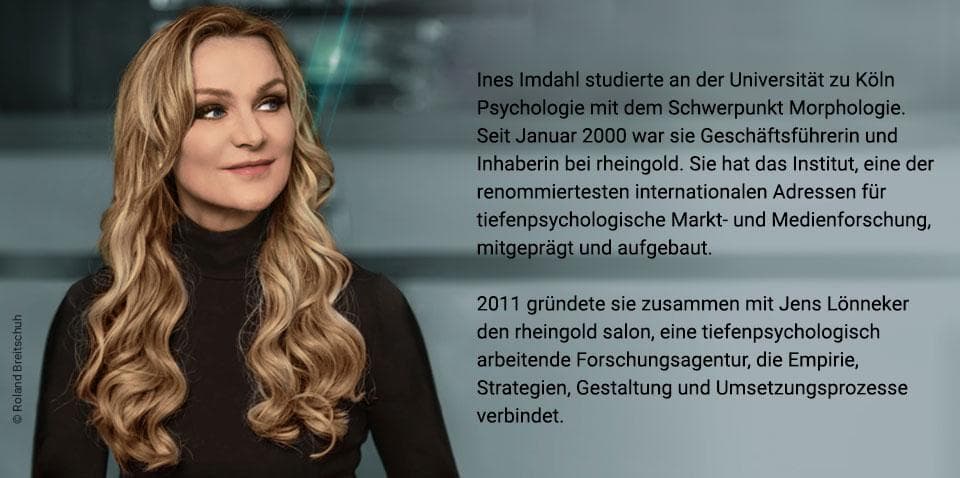
Jens Lönneker
In a world where everyone is broadcasting, "listening" is in demand. Market and media research needs new concepts for this. Jens Lönneker gave an interview about our latest study on media acceptance & media criticism. Read the interview with Succeet to find out what it's all about in Germany.
Mr. Lönneker, you have conducted a study on media acceptance and media criticism in Germany. What is the credibility of the media in the face of "fake news" and "lying press" accusations?
Approximately 75% of Germans have more or less great trust in the established media. In the West, at 77%, it is slightly more than in the East at 69%. But be careful: 25% of the adult population, and thus a large minority, are developing very critical attitudes towards the established media. In eastern Germany, this minority is historically larger at 31% than in the west. However, it still accounts for 23% of the population there. With regard to media acceptance, we are therefore dealing with a division of society. This is very worrying. According to important media researchers, a functioning democracy requires broad acceptance of the major media.
Aren't you exaggerating a bit? Do we really have to see democracy in danger just because people are critical of the media?
Let the findings and figures speak for themselves: 68% of the media critics surveyed feel abandoned by the system and politics. 32% are avowed AFD voters. In addition, media critics have repeatedly developed extremely critical attitudes towards the system in detailed individual interviews. One can say that many of these people no longer have the impression that their concerns are being heard in society. Most of them lead a completely normal life, but feel almost like strangers in their own country - a phenomenon that also exists in other western countries and became the title of a successful book from the USA. It is therefore very important to listen to them seriously again. Because listening means attention, attention and thus being heard.

But wouldn't it be fatal to give people with media and system-critical attitudes a stage by "listening" to them?
They're basically getting this stage now. Precisely because they find little resonance with their personal concerns, they like to play on the keyboard of social hot topics, through which they then receive attention: such as expressions of sympathy for the AFD, criticism of the handling of refugees, questioning climate change, EU and system criticism, assertion that the media are controlled "from above". In the in-depth discussions, however, we often came across other backgrounds.
In my opinion, this also has consequences for market and media research: It needs new exploration concepts - a new way of listening to capture the perspective of these people. We have so far known the phenomenon that irrational or emotional motives for behavior are rationalized. Here and today one actually has to speak of a "Reizionalisierung". Because because there is a feeling that one's own concerns are not being heard, these are psychologically interwoven with stimulus topics. It is therefore important to capture the important topics beyond the "Reizionalisierung" when listening.
And what topics did you find there? What leads to media criticism?
Here we were able to differentiate three major topic areas:
Media withdrawal as a means against complexity and constant arousal\ The range of media on offer has continued to grow over the last few decades. Psychologically speaking, one can speak of a multiplication of realities. The media world has become much more complex. On the one hand, each medium develops its own perspective and its own focus on reality, and on the other hand, many are so similar that media critics often complain about both the variety and the uniformity. Overall, however, an enormous mass or a flood of media offerings is experienced. The constant excitement is therefore too much for these media critics, so they react with media withdrawal.
Media aggression as a means against disappointed life dreams\ Many media critics complain about major and many minor disappointments in their efforts to achieve their own life goals and dreams. They blame this on an overall social course that is "driving the country against the wall" (approval media critics: 78 percent) and which they see as being fundamentally supported by the media. This leads to a high level of aggression towards media and politics.
Media bashing as a secret hope for improvement\ Established media become a kind of interface for these people. They deal with them again and again, but critically and negatively. Psychologically speaking, there is still a relationship and a latent hope for improvement. However, these media critics are also tending to jump ship.
The interview was published on succeet.de on October 17, 2023. Read it here.