culture & society, business & economy, digitalization & media
“Every fourth person basically no longer believes in this system”
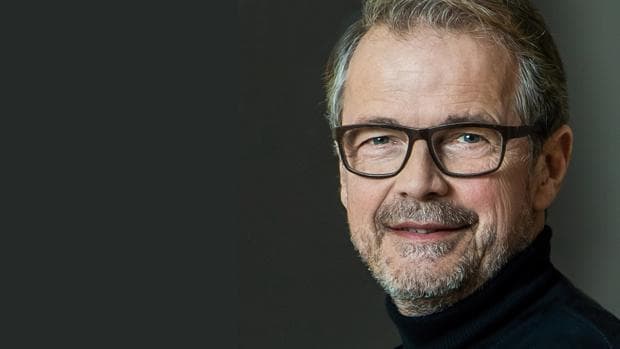
Jens Lönneker
Jens Lönneker has taken a deep psychological look at media critics. He came to alarming conclusions - but also found ways to win back trust. At least partially.
This interview with Jens Lönneker was published on December 24, 2023 on wiwo.de.
WirtschaftsWoche: Mr. Lönneker, you have held in-depth psychological discussions with media critics. What was the trigger?
Jens Lönneker: The environment for journalists in Germany is becoming increasingly difficult. In the press freedom ranking of Reporters Without Borders, Germany has even dropped out of the top 20 - also because there have been attacks on journalists. The Stiftervereinigung der Presse wanted to get to the bottom of this and understand the motives of those who are rebelling against the press. That's how I came into play.
You recently said that this was the "most important study" you have ever done. Why?
Because after carrying it out, I have the feeling that the situation is critical. This study is a wake-up call. It shows that we have lost a quarter of the population. Every fourth German is averse to the media and the majority of these people basically no longer believe in this system and feel abandoned by politicians. And then the next logical step is to question democracy. Even if these people say they are democrats, they are susceptible to people who have completely different intentions under the guise of criticizing the system. This study was able to work this out with great clarity. In the individual interviews we conducted, all of this gained great force.
You conducted a total of 60 in-depth psychological interviews. What exactly can one imagine from such an in-depth psychological interview?
It means that someone who has psychological training operates with exploration techniques. We are trained to understand sensitive issues, to pick them up, but not to let ourselves be emotionally moved. To let the other person continue to tell the story, to ask about the aftermath in order to get further into the depths. To explore: What motivates my counterpart's position? What exactly are the backgrounds?
A term you use in your study is rationalization. This means that media critics hide underlying motivations behind provocative statements, right?
Yes, exactly. With rationalization, it's like Freud said: We are able to rationally cover up motives that may not be so accessible to us. This can happen consciously or unconsciously. I could now tell you about 60 different profiles and stories that together paint a picture.
What the profiles have in common: that certain hot topics are brought to the fore in order to be heard?
Correct. I even considered whether it would make more sense to speak of "irritationalization" instead of rationalization. Because rationalization actually has the effect of developing a reasonable justification for your behavior. The interesting thing about the rationalizations that emerged in my interviews, however, is that they don't seem so reasonable at first - at least for the majority of the population. They only make sense when you understand that these people feel that they are no longer being heard in society. That they want to be heard. And then they find hot topics that ensure that people listen to them. But only in a negative way. Which in turn confirms their feeling of rejection. That is fatal - a vicious circle.
How do you deal with this type of rationalization? With rational counter-arguments?
Exactly not. You can't argue them away rationally. And that's a bit of the crux of the matter: good journalistic work also consists of going there and clarifying things. Fact-checking is also a word that is very fashionable today. This was a reaction from many serious media outlets when conspiracy theories emerged. However, it quickly became apparent that this entire fact-orientation did not help at all. Conspiracy theorists then developed the most obscure constructions to refute these facts. Which in turn is a clear indication that the real motivations for their basic attitudes lie elsewhere.
So what to do instead?
The key is to listen to people instead of wanting to lecture them. Instead of seeking confrontations that ultimately only confirm the current positions. Some feel bashed again and others nod. It was crucial for this study to endure even some tirades that you instinctively want to argue against. And then to see what can actually be found behind it.
How can this deep psychological moment be integrated into journalistic practice? Thought of in a very practical way.
Of course, journalists currently do not have the resources to get to the bottom of everyone they meet in a deep psychological way. Nor do they have the necessary tools. But the latter can be worked on. I am already in talks with several publishers and associations about this. Why not integrate some of these interviewing skills that psychology has developed as part of journalistic training? If journalists have these tools, they can have deeper conversations and question themselves better. You can learn that, you can teach that. And that can also lead to a greater understanding of information for the media. Make journalism in Germany generally better.
Nevertheless, this is of course relatively difficult in everyday editorial work. What could be a first step to pick up the people?
I can't promise you heaven on earth and claim that I have the solution. Resources are scarce, I see this need. But I believe that a lot can be gained if you actually ask yourself to what extent you quickly classify someone in an article according to prefabricated categories. That's what people accuse the media of: that journalists approach people with prefabricated classifications and only look for certain sound bites to prove their own world view. It would be helpful if you sometimes admonished yourself and said: I don't classify people too quickly. Don't immediately condemn the other, which seems strange and peculiar at first. Instead, ask yourself: Have I really understood that? Do I know the background? In general: It is important to show presence wherever you can. To give people the feeling: Yes, we understand you. We are dealing with you.
In your study, you divide media critics into different groups. Not all of them are equally easy to pick up, right?
Yes, we have distinguished three groups. Firstly, the media withdrawal group, which says: I consume less and less. Then the media-aggressive, who argue very hard and strongly criticize the media. And thirdly, the media bashers, who still follow the classic, established media intensively, but always take a bashing stance.
You compare this to a relationship that would probably be called "toxic" in modern German.
Yes, the relationship between the bashers and the media is a bit like a relationship that has gone awry. In which you only blame each other for things. But: You are still dealing with each other - even if critically. So you haven't really gotten rid of each other yet. Now you can say: You should solve that, that's not a good relationship. Or you can look at it the other way round, positively: This relationship still exists. It might be worth working on it.
And in your opinion, would these people be most likely to be convinced again by talking to them and engaging with them?
Yes. And what you really have to say is that you get the impression that there is sometimes a lack of truly high-profile conservative voices in this media landscape. If so, then it is immediately exaggerated in the right-wing conservative area. Not all of these people want a Julian Reichelt or something like that. But a classic, high-profile conservative voice that carries weight and is highly accepted. I think that would be good sometimes.
A means of combating the growing media skepticism in Germany is also more "constructive journalism", you write in your study. What does that mean?
Many people we interviewed lack a positive perspective. Due to all these new media trends to attract attention through search engine optimization and concise headlines, there are all the more articles that tend to be negative, that alarm, that catch attention by scandalizing something, putting something negative to the fore. This approach may bring better click rates for articles in the short term. In the long term, however, journalism loses people more overall. Constructive journalism, on the other hand, asks the question: Is there anything in this whole context that offers a solution? Something that offers a perspective?
But the newspapers can hardly only print positive news, can they?
No, nobody is asking for that. But one or two constructive articles can be included in between. In general: I am a supporter of Habermas' view that the media fulfill a certain mediating function in a democracy. In contrast to feudal societies, in which the leaders were appointed by God, democracy fundamentally lacks legitimacy in the first place. And it can only maintain this if everyone has the feeling that they are part of the whole. That they have a say in what government is in place and how the whole thing is done. And if a large part of society - a quarter of German citizens - no longer has this feeling, then we have a problem. In the end, it is simply about this: the media must convey to individuals that they are represented, that what they do is of interest. Only then will they have fulfilled their important social function.