publications, business & economy, digitalization & media
Why doesn't Antropic just move to Europe?
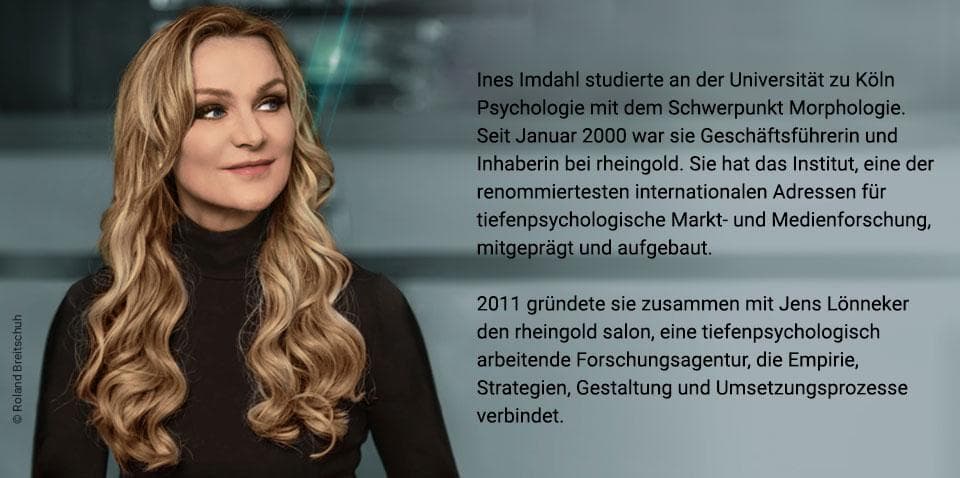
Nils Imdahl
So why doesn't Anthropic just move to Europe?
On Saturday, June 13 the U.S. government suspended all access to Anthropic's newest models, Fable 5 and Mythos 5, for any foreign national, whether inside or outside the United States. The reasoning given was thin: a security "jailbreak". The letter provided no specific details of the concern. Neither to Anthropic or the public.
This is not a one-off
To understand why a U.S. agency would block a leading American AI lab, you have to go back a few months. In July 2025, Anthropic signed a roughly $200 million deal with the Pentagon, and Claude became the first frontier model approved for use on classified networks. The catch was that the Pentagon agreed to abide by Anthropic's acceptable-use policy.
Then the relationship broke. The Department of War wanted Anthropic to waive its restrictions on mass domestic surveillance and fully autonomous weapons. Anthropic refused. On February 27, 2026, President Trump directed all federal agencies to stop using Anthropic's technology, and Defense Secretary Hegseth designated the company a "supply chain risk," the first time that label has ever been applied to an American company. Anthropic sued in two federal courts in March. The Fable 5 suspension is simply the newest round in a fight that has been running all year.
The irony is hard to miss. The administration says U.S. AI leadership against China is a national priority, and then it spends months trying to kneecap one of the country's best labs.
Europe is far behind the curve
So where does this leave Europe? Badly positioned.
Our most promising lab, Mistral, is genuinely good but still a step behind the closed frontier. Their flagship Mistral Large 3, released in December 2025, is a capable 675-billion-parameter open-weight model, but it benchmarks below GPT-5.x and Claude Opus (even further below Fable), and their newer Medium 3.5 competes at the Sonnet tier, two rungs below the current frontier. And Mistral is our best. No other European lab is close. Aleph Alpha (PhariaAI) and EuroLLM both sit well behind.
The obvious alternative is the Chinese labs. DeepSeek, Kimi, GLM, and Qwen are much closer to the frontier and often open source. But two problems remain. First, the strongest models need such a large compute investment to self-host that running them is not feasible for small and mid-size companies. Second, leaning on Chinese models without a strong European lab of our own means betting on the long-term goodwill of the Chinese labs and the Chinese state.
That leaves most European companies stuck choosing between American and Chinese vendors if they want to offer their customers the best AI available. Neither option is sovereign. Neither is safe long term.
A Match Made in Heaven?
The U.S. government does not seem to like Anthropic. Europe desperately needs a strong lab. On paper it looks like a match. So why not?
Because Anthropic is American in a way you cannot pack into a moving truck.
The capital is American. Google has committed up to $40 billion and holds roughly a 14% stake. Amazon, the largest investor and primary cloud provider, has committed billions more. The chips are American. Anthropic trains across Google's TPUs, Amazon's Trainium, and Nvidia's GPUs, and all three are designed in the United States. The datacenters sit on U.S. soil at a scale that makes the idea of relocation almost funny. A single gigawatt of capacity costs around $50 billion, roughly $35 billion of that in chips alone, and Anthropic has reserved capacity on the order of ten gigawatts.
And then there is the detail that says everything. Anthropic now rents compute from Elon Musk's SpaceX, taking the full capacity of the Colossus 1 datacenter in Memphis and paying about $1.25 billion every month through 2029. This is the same Musk who publicly accused Anthropic of hating Western civilization. So look at the actual position the company is in. Its flagship model was just frozen by the U.S. government. Its largest compute bill goes to a rival founder who insults it. And it still cannot leave, because there is nowhere else to go.
The real question is what it would actually take to build the stack here. And whether anyone is willing to pay for it.