publications, advertising & communication, women & men, digitalization & media
Images of Women!
Ines Imdahl
Women in Media and Advertising – A look back.
A lot has happened – in the last 50 years. Basically, the entire emancipation process could be traced, which in the meantime some women would even like to reverse. To what extent is the development of femininity also reflected in the images of women in advertising and media? Does so-called emancipation also have an impact on the way media is dealt with – especially women's magazines? Are they read and used differently today than they were 50 years ago?
The roles of women
It may be surprising at first glance, but the role of women has changed less in its content – but rather in the number of roles to be fulfilled. If women had basically only one role to offer 50 years ago and therefore no choice, today there are many offers – yes, basically far too many. Women are faced with a dilemma. They not only have to be perfect mothers/housewives, but also look great, even after the birth of one or two children, and also get ahead professionally as much as possible. The key thing is that the 'classic' ideals have not lost value, especially in Germany. They are only equal alongside other ideals.
'Excuse me?' some might ask, 'aren't women more conservative today than they used to be?' That's right. And yet there is still a lot of the past there. Sometimes obviously as a clear decision for the classic housewife existence – and in fact not as many women in Germany are employed as in other European countries – sometimes hidden as a secret ideal. Many women want a 'prince' who, in addition to other needs, also takes care of the financial side of things. The more or less openly discussed mother ideal – in the eyes of mothers, it is best for the positive development of the child if they stay at home personally – is only more pronounced in Poland in Europe. It manifests itself in the extremely bad conscience of German mothers who have their children looked after – yes, even the fathers are often only second choice.
Female advertising images
But: Women don't want to see that. They like themselves differently: beautiful, fashion-conscious or at least style-conscious, educated, sovereign and independent. These sides of women also exist – in addition and as further personal ideals that must be fulfilled.
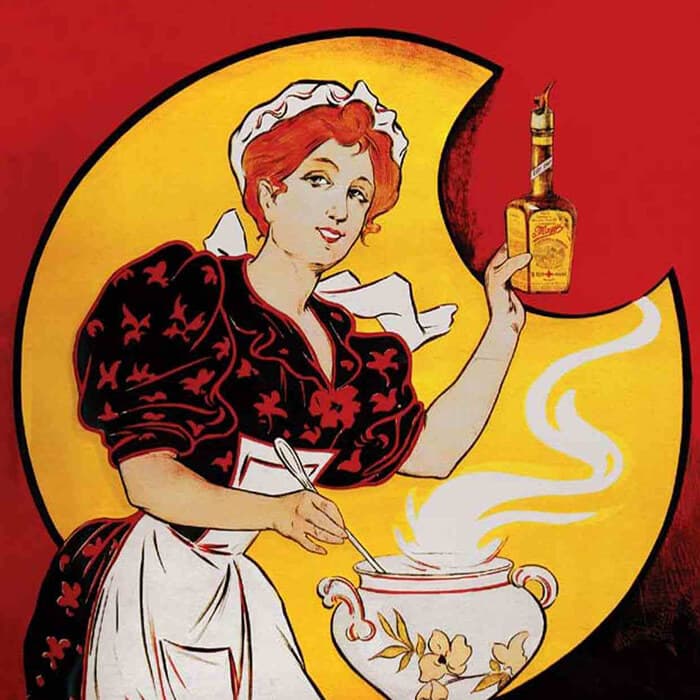
Feminine sides that we also see in advertising – beautiful and erotic women who are in no way inferior to men, often even 'dominate men'. This is evident in print ads – women are often 'on top', looking down on men – as well as in TV advertising – here men are kept waiting (Jule Mumm) or the door is slammed in their faces (Brunch) – which doesn't bother the men – they keep waiting for their darling! 50 years ago it was exactly the opposite: women looked up to men and the subordinate role was rarely overlooked.
The images of women in advertising today are often too confident and assertive. Women feel that it is not that easy and experience them as too superficial. They don't want men they can do 'everything' with – but they don't want to go 'back' to the stove either.
Women's magazines: Mirror and development aid
Last but not least, women look to women's magazines for other answers to their situation: How can I live all these options without taking on too much? Do I really have to give up having children to have a career or vice versa? How is it possible to live in real partnerships etc.?
Questions that magazines cannot always answer either. But a lot has already been gained when women have the feeling that at least it is shown here that others feel the same way. That the problems are known and not denied. Above all, that they don't pretend that it's very easy if you just have the right fashion, the right lipstick or the right time management.
In this respect, a women's magazine must constantly change – in line with the changing roles of women. It must be more complex and differentiated today. It cannot give advice without first examining all sides, discussing every pro and con. Blanket answers are accepted less than ever today. On the other hand, a women's magazine has had the same function for decades: to inspire, provide orientation and fuel dreams. But that alone would not be exciting enough to keep women with the magazine. A good magazine also creates envy and competition – if only through the advertising in it! – and increases the pressure on women. This also explains the dissatisfaction with the magazines that is often found in surveys. But this is by no means only negative: women prefer a serious discussion to a neutral, harmonious, perfect world. They look for this in the women's magazine and look for 'arguments' and suggestions that stand up to reality.