advertising & communication, children & youth, digitalization & media
Why social media is neither good nor bad.
Ines Imdahl
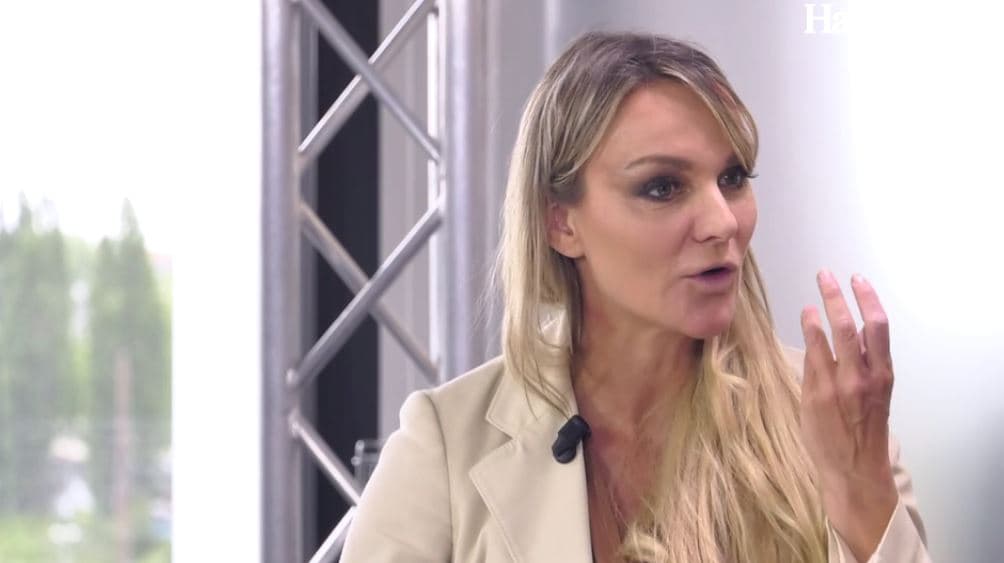
Ines Imdahl reveals in the turi2 interview with Heike Turi how social media can be successfully neither demonized nor idealized & why it is psycho-logical that social media fatigue sets in. Also: Tips & pitfalls for communication professionals & CEOs.
You can read the article in full here. You can find the original interview here.
Heike Turi: Ines, when you look at the phenomenon of social media as a psychologist and mother of four: What is good and what is bad about social media?
Ines Imdahl: In general, there is nothing bad or good, as with almost all phenomena. As a researcher and psychologist, I am not primarily concerned with categorizing into good versus bad, but rather with observing, describing and understanding. As a mother, however, it is not always possible to maintain such a distance. I often think: Is this good for the children? Is it good for me? What does it do to the children? Then, conversely, it helps me that we have studies that allow me to explain to our children why we do not allow certain things or see them more critically than other parents.
Exciting topic. Let's first look at the advantages of social media.
Social media offers the possibility of networking and making contacts in an unprecedented way. Also to get back in touch with people you may have lost sight of. This creates a feeling of relevance and importance for people. In addition, there is the possibility of comparison and relativization, especially with topics in which many people otherwise feel left alone: body shaming, imposter syndrome, ADHD, eating disorders - suddenly you are no longer alone, but see that there are many people with this problem. This creates a feeling of being in good hands and relief. Both aspects are generally dealt with under “community”, but I think it is important to consider both in more detail.
What makes social media so attractive to many people - especially compared to traditional media?
The preparation of information in a visually or linguistically easier digestibility. In other words: In just one sentence, in a 15 to 30 second short video, in an attractive design, with a strong hook at the beginning, social media delivers very easily accessible information that you would otherwise have to painstakingly gather. Many of them stick because they are surprising or because they connect to our topics in a meaningful way. This creates the feeling of being well informed and up to date. Plus the opportunity to quickly create attention for a topic in a wider public, to be able to stand up for something, to make a difference - even as a normal person, instead of having to wait for media to offer you this public - I can confirm from experience, it applies at least to my heart topic of gender equality.
You are a scientist. You know that not all that glitters is gold.
Of course, the advantages also pose psychological challenges: the option of contacting and networking makes the number of followers a new currency, the feeling of relevance is relativized, and people - especially young people, but increasingly older people - feel less important if they only have a few contacts. Young people even take the number of likes on a post or reel as a yardstick for whether their own experience was good enough or even their life is worth something.
How reliable is the aspect of being in good hands and being heard?
Of course, the lives of many people on Instagram or TikTok just look too good. Instead of feeling valued, many feel worse - also depending on how long they use it. This particularly affects young girls, who are disproportionately unhappy and dissatisfied - and they are also noticeably often pushed back into old role models. A major danger also lies in the belief of young people that they can become famous quickly and without effort. Over 30 percent now want to be famous for the sake of being famous. 15 years ago, this was less than 13 percent in this target group. As a result, many people give away far too much, including all too personal things and naked skin.
As a mother of a teenage daughter, alarm bells must be ringing for you. How do you and your husband keep control of social media with four children?
As parents, we try to develop rules with our children that ensure that the advantages outweigh the disadvantages in large parts. This includes plugging the cell phone into the shared charging station in the kitchen in the evening, no media at night or while eating. School time - i.e. the specific morning at school - has also been completely cell phone-free for us until the age of 14. Which made us the only ones, according to our children. We also try to watch content together with the children that excites them and talk about it.
Why don't all parents handle it that way?
It is perhaps the hardest thing to admit that we can never completely control the use of social media and at the same time not to say when dealing with social media: There is nothing you can do anyway. Our studies show that parents tend to give very or too much free rein to social media. We have measured that in Gen Z, children spend up to eight hours a day on Instagram, most of it during class time. The children did not have any limitations from their parents - and it took place despite the cell phone ban in schools. While we are dealing with a generation of parents who are often associated with the term helicopter parents, they seem rather helpless when it comes to social media. From my point of view, this is mainly because parents are completely on their own here and currently have to decide on gut instinct how they want to deal with the situation - due to a lack of really good study data, what and how much is still okay and what is too much.
Personally, I am bothered by the flood of information and the inexhaustible variety. But that may also be due to my age.
You are not alone. A certain “social media fatigue” is spreading. It is becoming increasingly difficult to sort out what is important, what we want to absorb, what is right or wrong. We are under permanent stress from the constant bombardment of information, which we can hardly escape. From time to time, my children conversely delete TikTok every now and then. One of them, as an adult, said goodbye to his smartphone completely for two years - our computer science student, of all people.
What is so bad about being entertained by social media?
People want to be entertained. Always have. We cannot be without stories, they are literally entertainment for the soul. First of all, entertainment is not negative. What is more critical is how the entertainment is done. If it consists only and exclusively of short reward impulses, then this does not necessarily lead to positive developments for our soul's household, but rather to an increased tendency to depression, a lower frustration threshold and learning difficulties or even dependencies.
Is this where traditional media has the opportunity to regain relevance and win back ground?
We can also create soulful entertainment that strengthens the soul, motivates us and also our democracy. And that's where the traditional media come into play in my opinion: On the one hand, the topic of entertainment is something that TV in particular has been good at for years - and they can help shape social media on a large scale instead of seeing it as competition from the start. Especially when it comes to content, there is a huge lever for traditional media that they can use to ideally combine traditional and social media.
What advice do you give to communication professionals when using social media?
In general, it should be difficult for any brand manager to avoid social media today. However, it is much more difficult to build brands solely through social media and tell good brand stories than is the case in traditional media. Brands are like people: Even if many people say today that people are personal brands - it might be wise to think the other way around and talk about brand personalities. And a personality needs stories that bring it to life or keep it alive. It doesn't just exist to sell, to be known - but delivers added value in people's everyday lives. A feeling of well-being, a benefit - as we secretly expect from a person. As a brand manager, I have to ensure that this added value becomes noticeable and visible - and social media is a means to this end - it should not be the only one for people and brands.
How dangerous is social media for brand managers?
It is dangerous to believe that social media - and AI - will solve all the problems, challenges and challenges of communication virtually on their own. That I no longer have to worry about myself, but believe that I can hand over control to the algorithms or the social media agencies - which, by the way, are springing up like mushrooms and often only have a limited knowledge of what they are doing, but promise everything. The idea that you can virtually get rid of communication and hand it over to the platforms is appealing - and instead of leading to more, it leads to less proximity to the customers.
What mistakes should communication and marketing professionals avoid?
The social media communicators often make the same mistakes that traditional advertisers have been researching for years and gradually abandoned - at least some of them. Here, the wheel is often reinvented and existing knowledge is not used: Penetrance is just as annoying online as it is on TV or in the mailbox; extreme targeting does not necessarily lead to brand loyalty and there is even negative conversion. In my view, investing the spendings solely in social media is not a good idea. Especially in order to strengthen the issue of truth and authenticity, it is relevant to have a good media mix - it's not just about presence, but also about credibility and something like proof in the real world.
What about working with influencers - are virtual influencers replacing today's creators?
Virtual influencers are smooth, do not contradict and do not age either. We are also fascinated by the possibilities. How close does AI get to real people? We will continue to try and exploit this. Nevertheless, real people will remain relevant as influencers - or even become more important again. Precisely because the artificial is so over-perfect due to the filters and editing options, the longing for the real thing is increasing in the same way: more and more influencers are showing this. Celeste Barber is one of them. She recreates perfect videos in “real” life and counts 9.6 million followers with her imperfection.
What are the advantages and disadvantages of virtual influencers for brands?
Companies can choose between AI-controlled marketing, which currently gives them the feeling of not having to deal with difficult influencers and avoiding glitches, and authentic, real people who are not entirely for sale and cannot be influenced, but who are particularly real and authentic because of the small degree of imperfection. For the belief that we can stage everything perfectly, we are currently sacrificing spontaneity, coincidences and imperfection again. This is often where the interesting aspects of influencer marketing develop. And young people are also picking up on the counter-trend: with Be-Real - a similar function is already available on TikTok - or also on Twitch, where it has to be life and real - no filters, no AI, no bots.
How much social media does a CEO need?
Of course, every corporation wants its employees and management to stand up for the company, represent it and carry its values and strategic positioning to the outside world. For me, this is particularly successful for CEOs when they not only communicate their strategies well - which you should expect from a CEO - but also show their human side. Their personal attitude, which is still there even when a company is changed, but also a failure, a mistake, then it is not just marketing, but really credible. What I miss on social media platforms, by the way, are the medium-sized entrepreneurs. In my view, a group that all too often shies away from the public eye. But we need their attitudes and positioning right now - especially against the right. I think this group could achieve a lot more - and yes, that's a call and it's not my first.
Three golden rules for a successful social media presence by Ines Imdahl
1. Regularly, but not excessively: A lot is not always better and can even be annoying. Relevant regularity is better than pure quantity.
2. Public: a good mix of private and public relevance. Many brands, companies and CEOs post too smoothly and impersonally. Attitude and authenticity are important.
3. Digital living room: You don't have to allow everything on your own feed/account. Anything that you would not accept in your own living room, such as insults or right-wing extremism, can also be deleted here.