publications, culture & society
Why we can learn from the Corona Virus...
Ines Imdahl
...and that this is not a new plea for crisis as an opportunity.
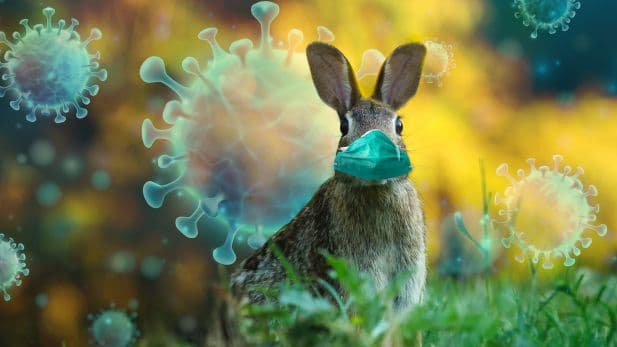
The virus has changed. It has mutated and become faster. If one were to attribute some kind of secret intelligence to the virus, one could interpret it as having secured its "survival" by adapting to the same, uncreative measures to combat it. (Yes, I know that viruses often change in exactly this way...)
Of course, this is a thought experiment. And of course, I am not seriously attributing a will to the virus. Nevertheless, this is a popular way of explaining strokes of fate such as pandemics. In the Middle Ages, it was often incorporated into the narrative of the "punishing God." Today, Bill Gates fulfills this function for some as a substitute. For an increasingly large part of the population, this seems easier to accept than a stroke of fate for which no one in particular is to blame. Which is not a punishment or an evil will - from whomever.
Because politics is not to blame for the virus either. However, it does bear some responsibility for the uncreative, sluggish, and overly bureaucratic approach to combating it. From the delay in ordering (masks, vaccine doses, tests) to the snail-paced creation of an app, plans, or restructuring of the health authorities, there is already enough excitement. (Can someone please explain to me why health authorities are closed on weekends and cannot trace chains of infection, but traffic wardens walk through the city?)
I would much rather address a method that is not a sensible means in a crisis, neither in companies, nor in brands, nor in politics:
The More or Less Method.
The more infected, the more lockdown. If the incidence rate falls below 50 (alternatively below 100/200) or the R-value below 1, things are eased a bit again. Then the schools are partially opened until - it is foreseeable - they are closed again because the numbers have risen again.
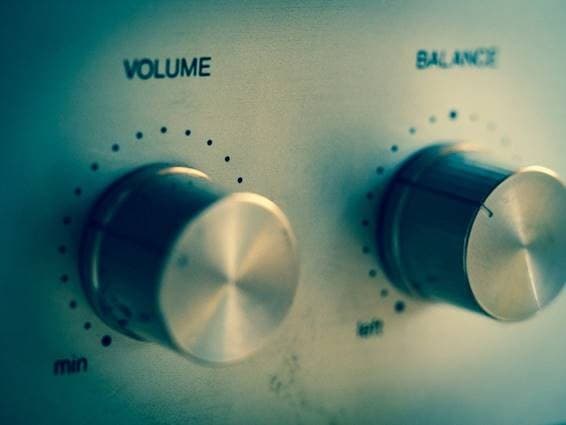
In the "more or less" almost all political demands are expressed beyond Corona: More cycle paths, more environmental protection (YAAA I am for both, but that is not the point here) - less car traffic. If the auto industry collapses, the cry for more state support through scrappage premiums or similar is heard. Parties differ almost only by the "how much": How much Europe, how much environmental protection? How many women? That is tiring - and moves little. It is like the volume control - a direction of movement. Accordingly, you sometimes hear nothing from some topics. And then a lot again.
The more or less principle is not binding, not crosswise, not spiral or circular, not variable (transverse would also fit, but the word is unfortunately currently reserved for people who think even more stubbornly).
If something does not work, does not lead to success, then it is not always good to simply continue doing the same thing. Just a little more or less of it, stricter or more intensive. Simply switching a campaign that is not working more often does not help much. Letting a company without orders continue to run unchanged and only reducing personnel? Doesn't sound good. Unreasonable and unpsychological. Nevertheless: this was the main positioning of most large management consultancies. Reduce costs, increase profits. Or at least get out of the red. Real restructurings are rare. And so, the question for companies is often: How much costs can I save? How much diversity do I have to have? How much sustainability is necessary?
Admittedly, many companies are showing themselves to be extremely agile, flexible and creative these days. This speed towards digitization was unimaginable a year ago. But many companies are not even allowed to try out their agility and creativity. Like restaurants, retailers, theaters, music organizers, solo self-employed. They are only allowed to open or close. More or less open. Their creativity, their potential for change is being stifled. From all sides.
We all know attempts and examples that could work. Theater and religious services outside. Tests on own responsibility. Self-initiated filter installation by parents in schools, UV-C lamps in buses and trains that kill the virus in Hanau or Rüsselsheim. Yes, and then South Korea. Where an app in the open!!! schools became the most suitable preventive instrument, quarantine takes place in a targeted manner and the numbers are far below ours. Or Smudo, who is developing an app for the restaurants that is worth something and makes the slips (slips for tracking, can you believe it?) superfluous. Or Australia or New Zealand, both almost without infections. And even good old England. Where the monarchy has survived as well as the British pound, and which has poured into endless bureaucratic negotiations in terms of Brexit. Even there, they were clever enough to hire some experienced managers to procure enough vaccines. Thought out of the box. The Bureaucracy Box.
I am not in favor of stricter measures and have been writing for months that what we need now is confidence. This new opening does not create one for me. Because the return to the eternal lockdown is already around the corner. This opening may take longer. As paradoxical as it sounds, I am therefore also not in favor of looser measures. I am for a different principle. For a "different".
Of course, in politics, in companies or as a brand, you cannot always have the right answer to crises. A virus like this is a big crisis. You have to try things out. The first idea was to reduce contacts. And closures. Worked a bit and calmed down a bit. Last year. But that is no longer enough. (Ha! No more!) We need diversity, creativity and the freedom to implement creative solutions everywhere and quickly.
In psychology, by the way, "always more of the same" is a neurosis: one only tightens one knob more and more narrowly. To get out of there, it has to be different. We don't just have to flip the switch, we have to reconnect the wiring.
"Our head is round so that thinking can change direction." So the saying on a poster that I had in my room when I was 13. To ensure our survival, and that in several respects, we too must mutate. And become faster. That is more than more or less. And also more than more of the same. It is different.