publications, culture & society
Between Carelessness and Guilt
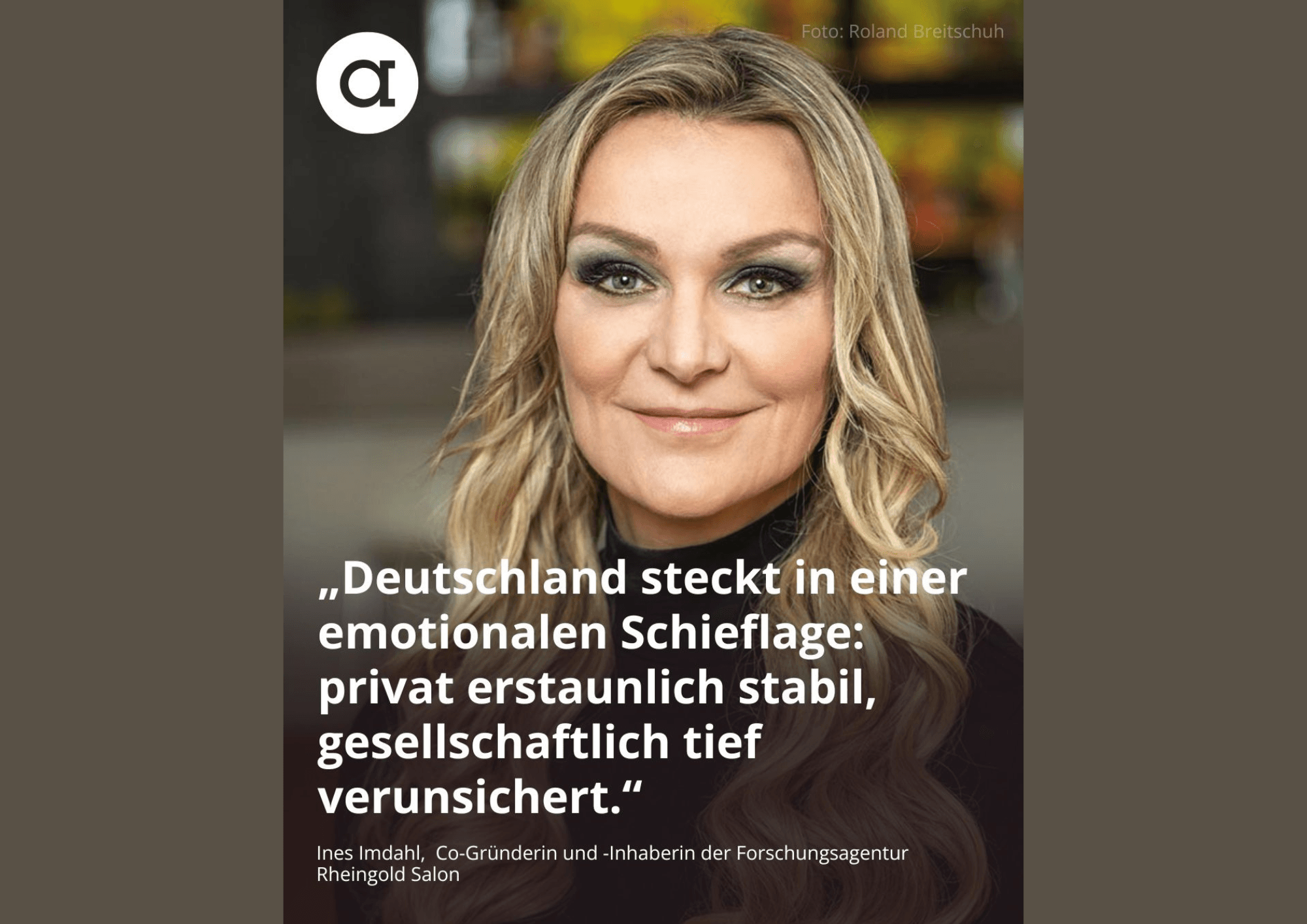
Ines Imdahl
An article by Ines Imdahl has appeared in planung&analyse online – read the original text here:
How people deal with the easing of restrictions and why masks can be a probation officer
You can see them strolling, shopping and even forming small groups again, carefree to happy. The time after the first easing of the lockdown
causes different feelings in people. Psychologist Ines Imdahl from rheingold salon has observed and described them. Consumption
is not necessarily the top priority. And the breathing masks are a reminder of the fragility of the situation.
The re-awakening of inner-city life fits in with the post-Easter period. Spring generally drives people outdoors. They become restless, long for other people, and get dressed up. This year, they have even more catching up to do than after a normal winter. And indeed: with the first day of opening of some shops, the inner cities are much fuller than in recent weeks. Some can be seen strolling, shopping and even forming small groups, carefree to happy. Of course, there are also cautious people who adhere to all distance rules – and also some who are angered by the easing of restrictions and would prefer a longer closure. People's moods are as divided as the political attitudes towards this.
Overall, there are roughly three ways of dealing with it:
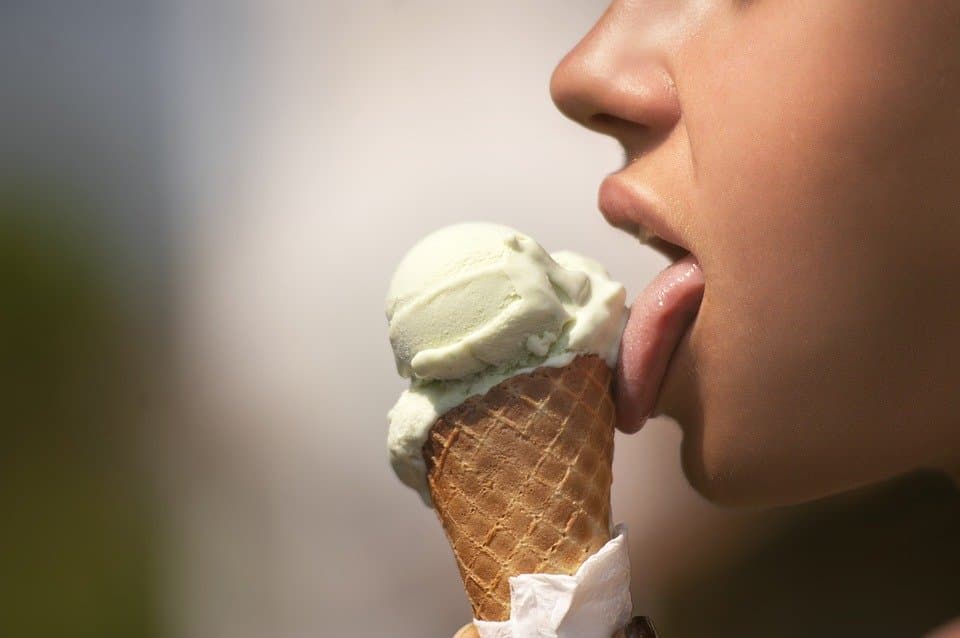
Carelessness: Many people lull themselves into a false sense of security that the worst is now over. They eat ice cream, are happy that they can win back a piece of normality and go shopping again, meet other people. They interpret the easing of restrictions as a license to behave almost as before.
Shyness: Others meticulously adhere to the rules, queue at a distance at the checkouts, wait until other people have moved on – they are careful, wait and see, and look around to see how others are behaving, do not trust the new peace either, but are secretly happy that life is moving on again.
Guilt: Others feel that the openings are too early – especially of shops that do not necessarily cover everyday needs, such as car dealerships, fashion shops, accessories and cell phone shops. They have or would have feelings of guilt about going shopping when people are dying in New York and Italy. They are also sometimes angry with the overly careless – and in turn worry about the freedom that has been laboriously regained
Luxury or small things? What are people buying now?
Regardless of how people feel emotionally about the easing of restrictions: What are people buying now? Will they make up for what they missed, or will they wait?
Despite the need to catch up emotionally, it is not to be expected that people will make excessively large investments – even the somewhat more carefree will probably be reluctant to do so. Nor will all smaller purchases that have not been made, for example in the clothing sector, now be made up for.
Rather, the small thing will initially be the new luxury: Eating ice cream on the street can become the new luxury. Simply strolling and enjoying the fact that the shops are open again is also a form of joie de vivre that many may be experiencing for the first time.
Easing of restrictions on probation: The sacrifices must not be in vain!
Of course, people are also reluctant to buy because the easing of restrictions is currently still fragile. They are a test of our behavior. Will we relapse? Or are we disciplined enough even in an easing to stick to the rules? From a psychological point of view, we must now prove ourselves. We must show that we can handle the new freedom very responsibly. For it is to be feared that people will not be prepared to make these massive sacrifices a second time: Looking after their children, foregoing income, jeopardizing their future. This is not just an economic or "virological" aspect, but also a psychological one. A second lockdown would overwhelm us psychologically. That is why the Chancellor is rightly so concerned.
Mask duty can be a probation officer
A few weeks ago, a mask requirement might have fueled people's carelessness – today it is the other way around. The mandatory wearing of masks – at least in shops and on public (local) transport – can make us more aware of the probationary period at every moment. There is nothing wrong with the joy about the easing of restrictions – but there is something very wrong with ignoring the reality and the danger. The masks can "fade in" the reality figuratively speaking at any time.