publications, media presence, digitalization & media
Why still read newspapers? Jens Lönneker names the reasons in an interview on the topic week at turi2.
Jens Lönneker
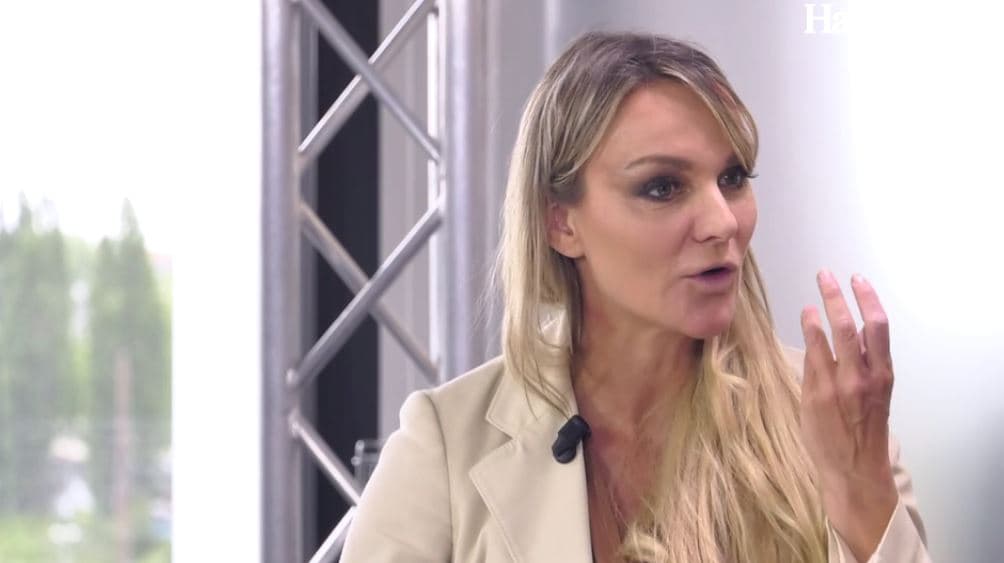
Jens Lönneker talks to Heike Turi in an interview for the 'Newspapers' theme week in turi2 about the role that newspapers play in today's media landscape between overkill & bashing and the democracy-strengthening effect they can convey.
Click here for the article. The interview in full below:
Jens, you are the father of four children - which part of the newspaper do you argue about the most?
Jens Lönneker: What a gruesome scenario! (laughs). The father as an anachronistic master of a print edition, with whom the rest of the family has to argue about the parts, is certainly a discontinued model. Today, there are many digital and analogue formats of modern newspapers. Our four children use different digital offerings from established media: push formats, apps, YouTube or TikTok. This is another reason why it makes sense for newspapers to have a future.
The result of your study "Media between respect & ostracism" shocked you. Why?
Jens Lönneker: A lot of people have apparently been lost to today's democracy in recent years! I was very shocked by the extent to which a large proportion of media-averse people no longer see themselves as part of this society. One in four is media-averse - and 68 per cent of them feel abandoned by politics and the system. This became very, very clear in the in-depth interviews. And it shows how important media acceptance is for the stability of a society. After the study, I found our society even more fragile than before.
How do people justify their aversion to newspapers and the media?
Jens Lönneker: The study deliberately focuses on the so-called "established media". It is a category that, formulated in this way or similarly, exists from the perspective of most media users. They include the offerings of the major television and radio stations, the newspapers and magazines such as "Spiegel", "Focus" and "Stern". There are three major complexes and groups that motivate and live out an aversion to these media.
Which would be?
Jens Lönneker: First and foremost, the so-called media overkill: more and more media offerings are competing for attention with ever greater SEO volume. Some people react to this with media refusal, it upsets them far too much. This is a phenomenon that other studies have also found in many Western countries.
And point 2?
Jens Lönneker: Is media aggression: These media users are worried about their future and miss political leadership that gives them confidence. They see the established media as a mouthpiece for the political nomenklatura and react aggressively. They speak of lying press, fake news and fundamentally question the representations.
Phew, and point 3?
Jens Lönneker: Is media bashing: This group criticises the established media, but rubs up against them and repeatedly uses them as a frame of reference. The first two groups are very difficult to win back, the third is on the verge of tipping over, so to speak.
Does society still need newspapers?
Jens Lönneker: Today's changed forms of media use and everyday organisation require the development of new formats that break away from the classic offering formats. There are hardly any work breaks in which people can or want to read a newspaper. However, there is a need for formats that offer a daily update of information. However, the dispute between newspaper publishers and public broadcasters over their online offerings shows that demand is moving away from the classic formats and there is increasing competition for the new ones.
What are newspapers doing right?
Jens Lönneker: The consistent focus on digital offerings and their further development is certainly the right thing to do. As is the continuous work on new payment models. In my opinion, the discussion about journalistic work itself is neglected. I am personally a big fan of constructive journalism because it also offers a new perspective and a fresh up for newspapers in terms of content.
What are newspapers doing wrong?
Jens Lönneker: I think that newspaper publishers need to do much more together to represent their interests together with other stakeholders such as advertisers and politicians vis-à-vis the major tech corporations. The advertising spend that is shifting to the tech giants is simply missing. Even if you are a newspaper magnate regionally, the individual German newspaper publisher is just a small number on a global scale of tech corporations. The aim should be to generate more advertising revenue together for your own formats.
Have newspapers already lost the battle against social media?
Jens Lönneker: In times of crisis, established media such as newspapers are often used. They continue to develop more credibility and seriousness. It is important to continue to establish digital newspaper offerings in the social media space. Initiatives such as #UseTheNews are exciting projects along the way.
What role do newspapers play in political opinion formation?
Jens Lönneker: In the past, newspapers, in conjunction with the other established media, have succeeded in creating a consensus on how the regional or national community views events in the world. They have virtually curated reality. This consensus has also allowed most citizens to see themselves as part of the community and the political system. This common view is an important prerequisite for the acceptance of a democracy. Jürgen Habermas therefore considers this form of mass media to be a prerequisite for a functioning democracy. In this respect, we need newspapers - especially in covering local and regional areas. Where they are missing, it becomes more difficult.
Are newspapers living up to their role?
Jens Lönneker: If the role of newspapers is understood to mean that they reflect something like the regional relevant set, they continue to try to do so - but with ever fewer financial resources and ever more digital competition. In fact, they often need to be even more local and regional today in order to gain this relevance. De facto, however, there are fewer and fewer resources available for this. It is a structural problem that newspapers, like other established media, cannot solve on their own. Fatally, however, there are very few initiatives that want to change these structures. We should not be indifferent to this because it attacks the stability of our society.
What needs to happen now?
Jens Lönneker: Given the overall situation, many more new measures should be evaluated jointly and the results shared. In general, from my point of view, one can hope, like Sebastian Turner, that young start-ups will rediscover this field for themselves, because today it actually only takes little financial resources to produce a digital medium. Or there will be a concerted action by the relevant stakeholders from politics, advertisers and newspapers or established media who are seriously working on the structures. None of this will be easy. But it is possible!