publications, culture & society
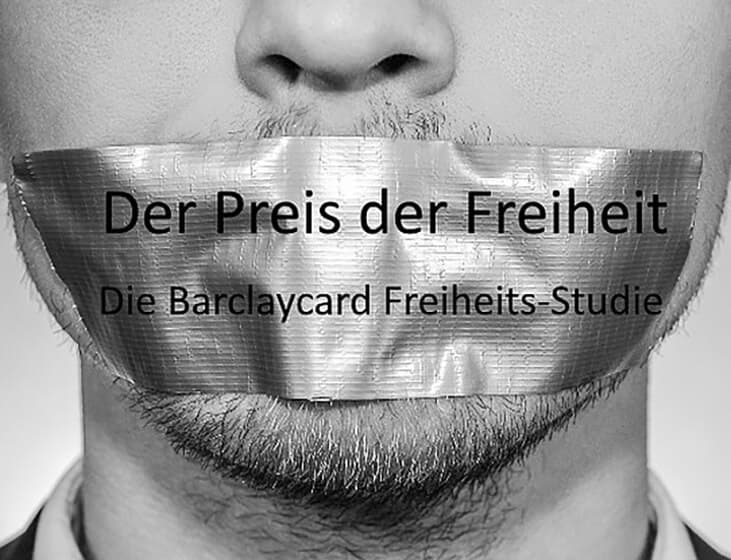
The Price of Freedom
Ines Imdahl
How free does Germany want to be?
Against the backdrop of current global political developments, the topic of freedom is more relevant than ever. What is the significance of freedom for people in Germany today, which is considered one of the freest countries in the world? Is the topic of freedom just a buzzword, especially before the federal elections? What do people understand by it today? Which areas are important to them when it comes to freedom? What is the relationship between security and freedom? And what personal degrees of freedom are important?
In a previously unique study, consisting of an in-depth psychological and statistically representative survey, the rheingold salon commissioned by Direktbank Barclaycard Deutschland (now Barclays) initially "put on the couch" 44 people in two- to four-hour in-depth interviews or group discussions. A freedom election compass was developed, and the results were checked representatively with more than 1,000 women and men.
The results: Germans feel free - too free, because freedom scares them. They are willing to exchange their 'great freedom' such as freedom of choice for the small, personal one. A not insignificant part would also sell their freedom. Men more than women. The price is between 1,000,000 and 10,000,000 euros. Nevertheless, in the end, freedom is more important to them than security.
The key results of the study:
1. Germans feel free - too free.
- Men feel freer than women. Only 2.9% of those surveyed believe that women are freer than men
- 54.7% believe that too few limits are set in Germany
- 77% of Germans want stricter enforcement of the laws
Germans generally feel free. Especially in comparison to other countries, they mainly refer to the fact that one can move freely and think freely. The oldest people in retirement feel the freest. While 86% of them speak of freedom, it is only around 62% among the 30-45 year olds. Men feel much freer at 73% than women at only 64%. Only 2.9% of people believe that women are freer than men.
If you look further behind the scenes, you quickly learn that too much freedom scares people. They want borders, laws and rules. Limitlessness endangers freedom. If everything is tolerated and everything is taken into account, you end up paying with freedom. Or, to put it another way: after completely free, you quickly become 'unfree'.
"Well, to be honest, someone only needs to come along and feel attacked as a vegan when a children's song says 'Fox, you stole the goose' - we are simply too tolerant," said one participant in the study.
Accordingly, more than 77% of Germans want stricter enforcement of laws, and almost 55% think that there are generally too few limits in Germany.
Furthermore, the existing rules and laws seem far too flexible and not irreversible enough to the Germans. But that means: The limitations and rules do not have to be sensible in every respect. They can even be arbitrary. The crucial thing is that they are irreversible.
"You can't have understanding for everything, that ultimately contradicts democracy - there must be firm rules in democracy," said one quote from the survey.
In order to maintain freedom, paradoxically, intolerance, limits and firm rules are needed. Or: We feel very comfortable in freedom when we are intolerant.
Overall, more than half of those surveyed find that too much consideration is given to foreigners, immigrants and violent offenders. Almost 50% also see it that way with people of other faiths - i.e. non-Christians. Even the needy in society are already being given too much consideration in people's eyes: around 15% each think this about the disabled, single parents, sexual minorities, and the homeless.
2. Seek small freedom, offer great freedom
- Almost a quarter of all respondents (23.4%) would be willing to completely forego their right to vote in exchange for a payment of 10 million euros
- While only 5.2% would be willing to have their partner chosen by their parents for one million euros, 16.2% are willing to completely forego their right to vote for the same price
The surveys showed that people see freedom not as a common good, but as a very personal one. A strong distinction is made between the large, general freedoms such as freedom of choice, democracy or freedom of the press and the own, small, personal freedoms such as free choice of partner, freedom of clothing or freedom of expression in private circles.
Only here does it really become meaningful for people. They are not willing to accept restrictions on a personal level. What is more: They are even willing to restrict the freedoms of others if this spares them such restrictions themselves.
For example, almost 40% of those surveyed believe that freedom of the press is not as important as their own personal security. People present themselves as advocates of freedom of the press and expression. But if this means having to restrict themselves personally as a consequence, then they prefer to see the press censored.
For example, the possibility of buying cheap fashion from large, international textile chains means freedom and is more important than the freedom of children producing in other countries. In addition, the respondents found it perfectly acceptable that they themselves pay lower contributions to health insurance companies or insurance companies than fat people, smokers or people living unhealthy lives. This seemed fairer to them than a solidary and democratic redistribution.
It quickly became clear in the interviews that people strongly divide freedom into two areas - their own, personal "small freedom" and the "great freedom".
3. The price of freedom - a "deal" at the expense of others
- Almost one in four (22.2%) would accept that others have to restrict themselves in order to be free themselves
- 54% believe that freedom is not free
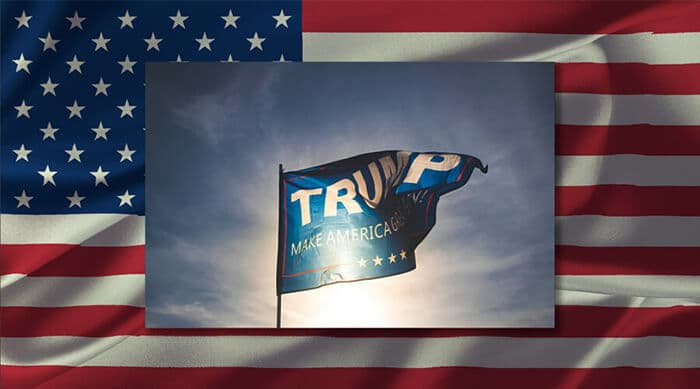
Following Trump's maxim, freedom is treated like a "deal". Ultimately, freedom is always a business for people for which they have to pay a price. Freedom is not free - 54% of all respondents think so. It requires security as a basis to feel free, such as controls at the airport or increased video surveillance.
Shopping as cheaply as possible yourself only comes at the expense of the environment in other countries or at the expense of children.
People themselves would prefer to always get away 'cheaply' - but the others should pay the restrictions / the price. This is also shown by these quotes from the qualitative survey:
"Let's put it this way: if I could ensure that my children can move freely and travel and the price would be that I would have to stay at home forever, then I would do that."
In a survey experiment in the in-depth psychological interviews, it could be clearly shown how far people would go. When asked whom the people of Leipzig/Cologne/Hamburg would lock up for their own freedom, an ever same pattern could be seen:
The Bavarians? Yes. The rest of the Germans? Yes. Certain religious groups? Yes. Only with the people of Leipzig/Hamburg/Cologne themselves was it over.
And most of them did not even notice the same principle. People only think of their own advantage in the short term. "Freedom begins where I restrict the freedom of others" seems to be the new imperative of freedom. Accordingly, 62% of those up to 30 years old accept that children in developing countries pay the price for their cheap clothing.
The fact that freedom is not free and someone has to pay the price is found by 54% of all respondents and 57% of men.
Nevertheless: People do not sacrifice freedom to security. 96.4% find freedom important. Security comes with 95% to a slightly lower value.
4. Freedom needs community
-
79.6% consider friends to be a crucial aspect of felt freedom
-
In comparison, the state (37%) or church (20.3%) are not necessarily perceived as freedom-enhancing
People need friends, love and community in order to be able to feel freedom at all. When asked which aspects promote freedom, friends (79.6%), family (70.6%) and their own partner (67.4%) were mentioned most frequently. The close bond to social contacts gives security in the world perceived as insecure. "Being completely free also means that you are completely alone, you don't want that, you want to belong and be popular", describes a test person from the study. In contrast, church, state or even the job are perceived more as control instances and freedom limiters.
Freedom also becomes noticeable through its enemy images and when it has to be defended against supposed enemies: Muslims, refugees, rulers, "dictators" of other states. Especially in the demarcation from enemy images, a kind of protective wall can be erected against the enemies of one's own freedom: "We have more freedoms, travel opportunities, free choice of clothing than others," said one participant in the study.
From a psychological point of view, the idea of Trump's wall is also a freedom wall. Almost all respondents build such a protective wall in their heads. Many also want a real wall against 'enemies' (refugees) in the concrete situation - especially in Bavaria.
However, this wall in the heads is of a magical nature, it is quasi-semipermeable. It shields off without restricting one's own travel or movement possibilities.
People have to demarcate their freedom from enemies - they cannot endure limitless freedom. At the same time, they need friends, love and community in order to be able to feel freedom at all.
Or as one respondent puts it: "On Facebook, I don't always say what I think because I just don't want to lose so many friends - you want harmony in order to feel free."
5. Thoughts are limitlessly free - really?
It is difficult for many people to free themselves completely from constraints in their minds, to do nothing with a good conscience. They almost always feel driven. Nevertheless, the longing is great to want to be completely purposeless, immersed, "lazy". "I just like to sleep, but you're not allowed to admit that," said one participant in the study. This makes it clear what problem people in Germany have with freedom today. Doing nothing quickly appears threatening, unproductive, is a reason for a bad conscience. Even in their heads, people are hardly ever really free.
For almost all people, childhood is the ideal of freedom: completely immersed in the game, forgetting space and time, within a fixed framework that the parents give (time of being at home etc.) and being safe in a loving community.
No thoughts had to be given to the limits of freedom, the enemies and friends. They were set 'arbitrarily' by the parents. Thus, childhood fulfills the most important criteria of freedom: Clear rules and 'arbitrary' restrictions, being safe in the community as well as complete immersion and mentally imaginative freedom.
6. The Freedom Choice-O-Mat
Over 1,000 people finally chose which freedoms are important to them:

If only one freedom could be selected among different freedoms, only 1.2% of those surveyed chose freedom of choice as the most important freedom and only 1.6% freedom of the press. On closer inspection, freedom of the press and freedom of choice are sacrificed to personal freedoms. Personal freedoms such as free choice of partner are more important to people. But also the apparently most important freedom of opinion is 'for sale'. With the help of the Freedom Choice-O-Mat, participants were asked for what amount they would have which freedom bought off. The results show that 'freedom' is indeed for sale. For example, around 34% are willing to sell freedom of expression for 10 million euros, as long as they are still allowed to say their opinion in private.
Other freedoms are sold even faster and sooner. Almost 24% would sell the right to vote completely for 10 million euros - if they were allowed to vote one last time, even 32%.
Partner choice is mainly bought off by men, if they were allowed to take a short look at the partner beforehand (almost 20%). 60% would have the right to free choice of clothing bought off for 1 million euros.
According to people, freedom is particularly favored by certain things or institutions. Neither the church nor the state or society in general play a role in this. Especially among younger people, family (82%) and friends (89%) are seen as the greatest givers of freedom.
Younger people are willing to forego a car (around 50%) for the rest of their lives, older people are more likely to forego a smartphone (around 51%). The car is mainly becoming a freedom runner among the 45 + generation.
Facts about the study
The findings on the topic of freedom have come about through neutral, product-independent surveys. They were in no way influenced by product questions and are not used for product-related market research.
-
As part of the qualitative survey, group discussions and individual in-depth interviews were conducted in Cologne, Hamburg, Leipzig and Munich. 22 women and 22 men aged 18 to 65 took part. The theoretical-scientific foundation is based on morphological psychology, developed by Prof. Wilhelm Salber, University of Cologne.
-
For the representative, quantitative survey, more than 1,000 people aged 18 to 65 were subsequently surveyed from the online access panel
-
The surveys were conducted in a period from February to June 2017.