publications, culture & society, women & men
“The soft and round, that can do something too!”
lönneker & imdahl rheingold salon
The interview on the book "Why women will save the world - and men are essential to it" with "Women in Leadership" by Ines Imdahl and Janine Steeger here in full:
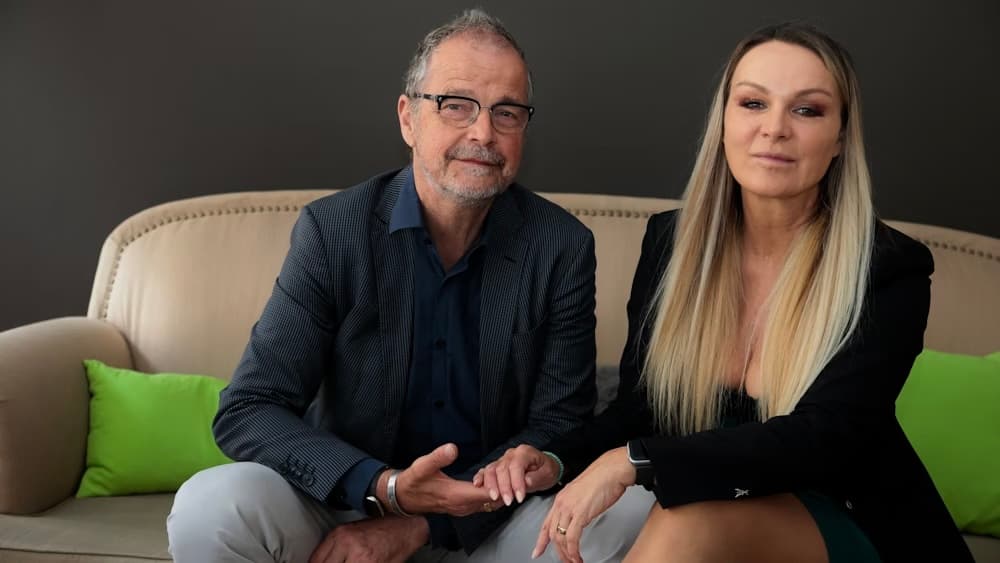
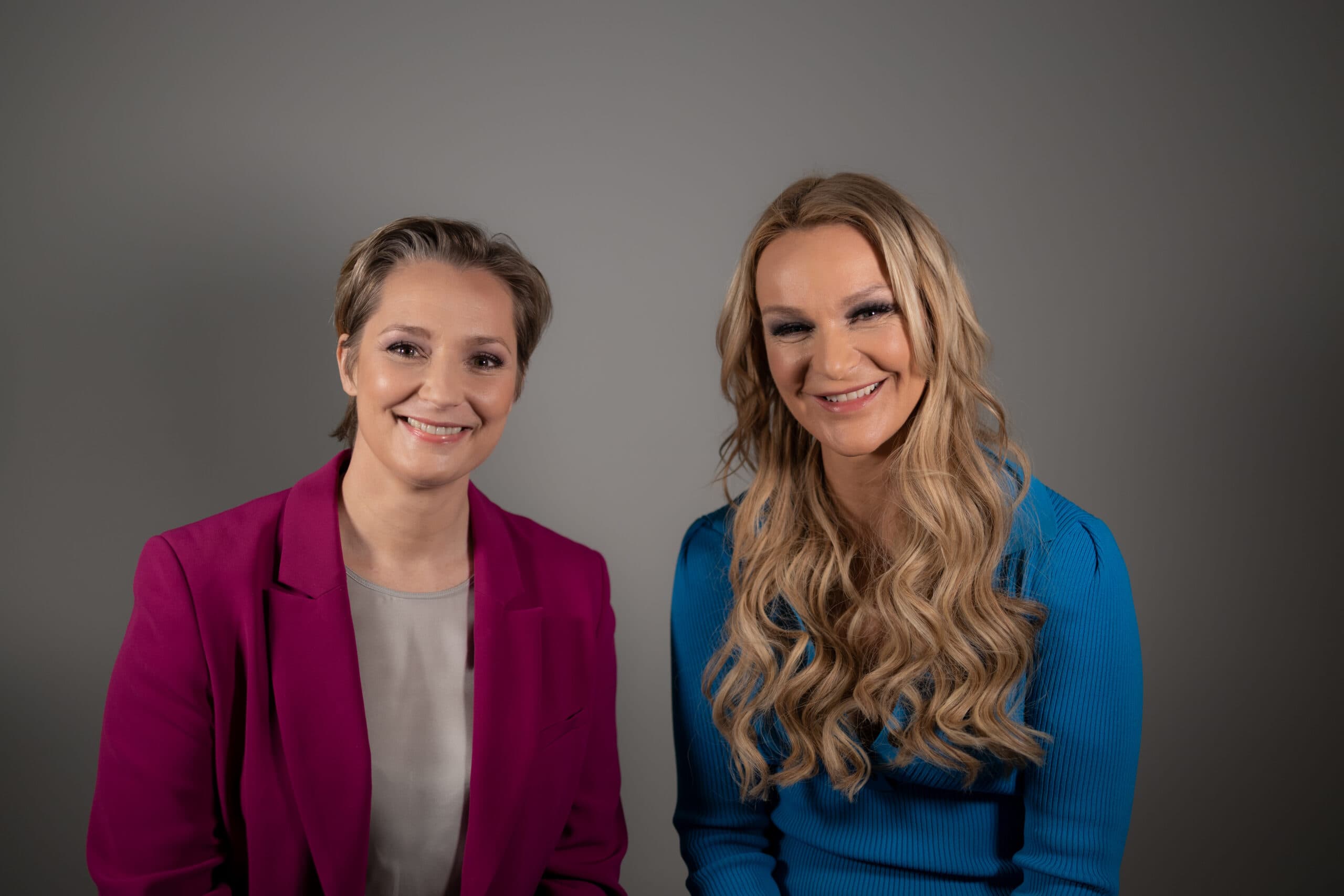
Ines Imdahl and Janine Steeger complemented each other perfectly in their joint book project:
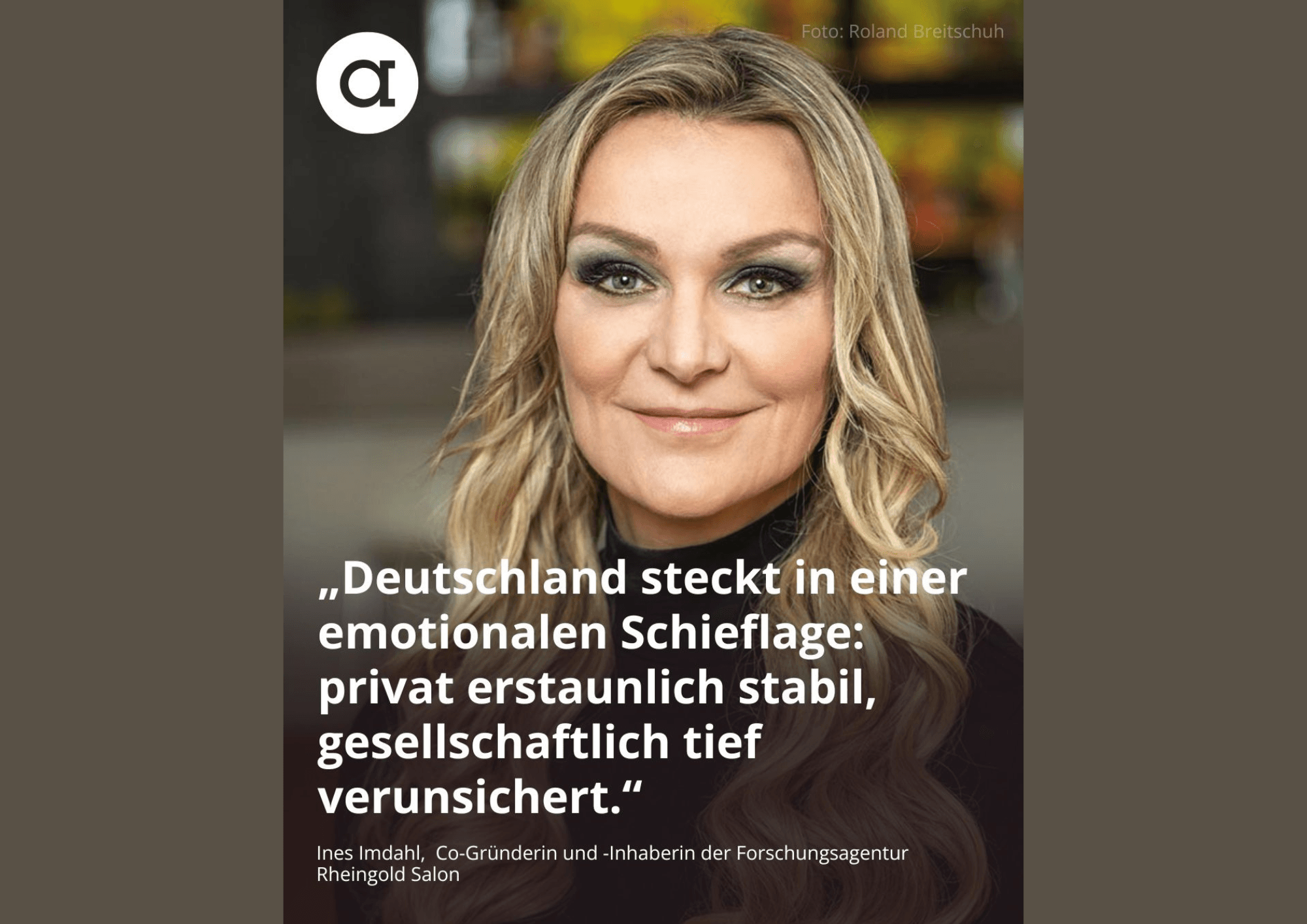
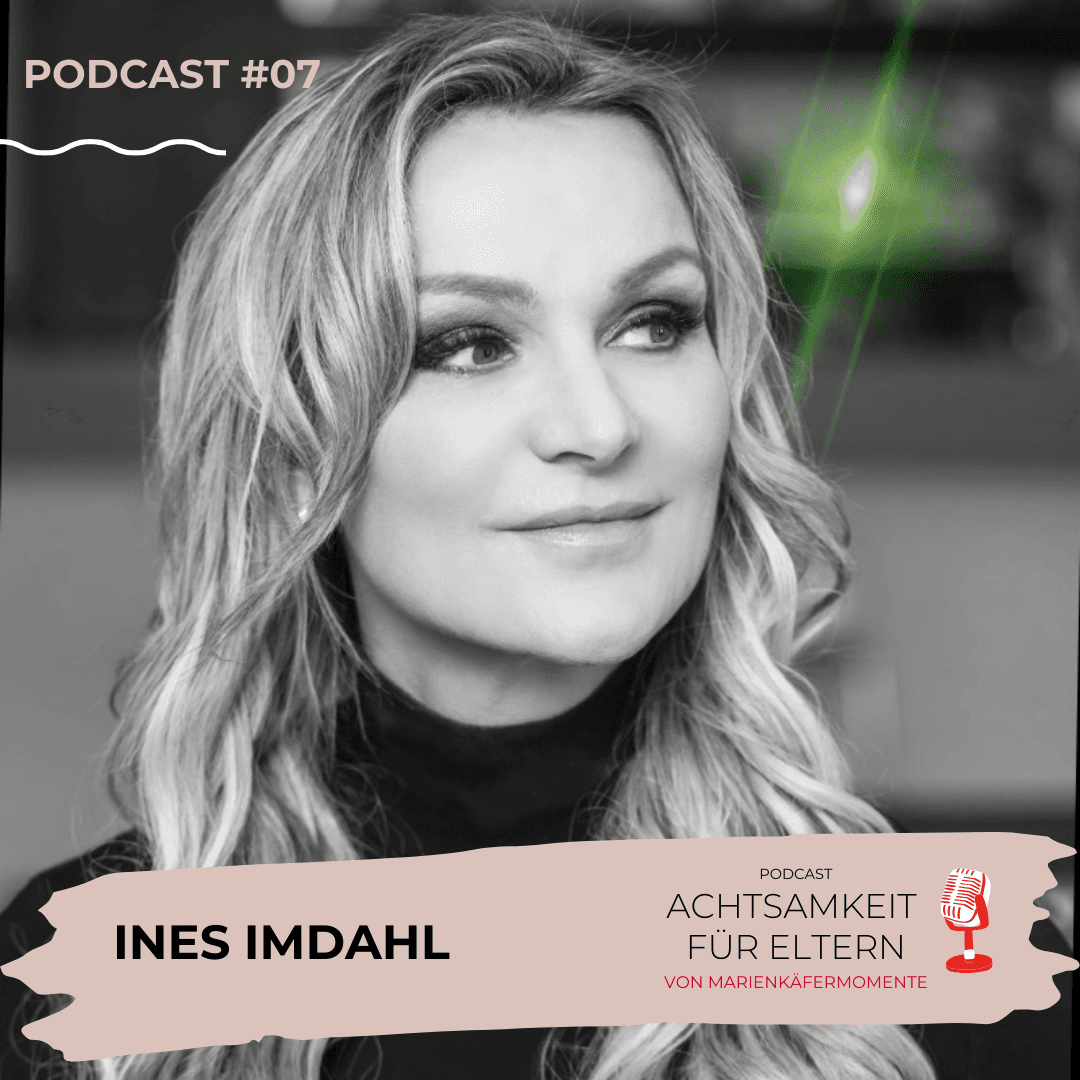
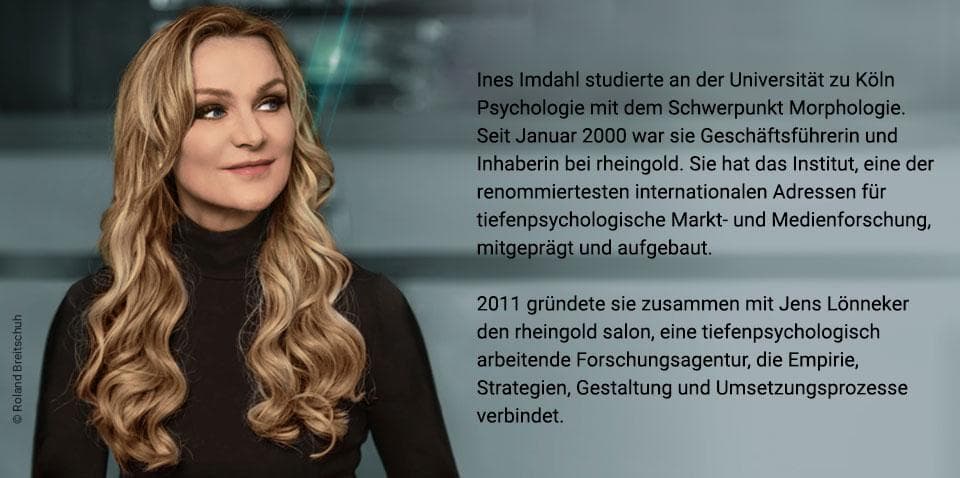
Ines is a psychologist and owner of the market research agency rheingold salon, which she runs together with her husband. For more than 25 years, Ines has been investigating from a depth psychological perspective how women feel, think, act and are seen in our culture. Ines has four children and lives with her family in Cologne.
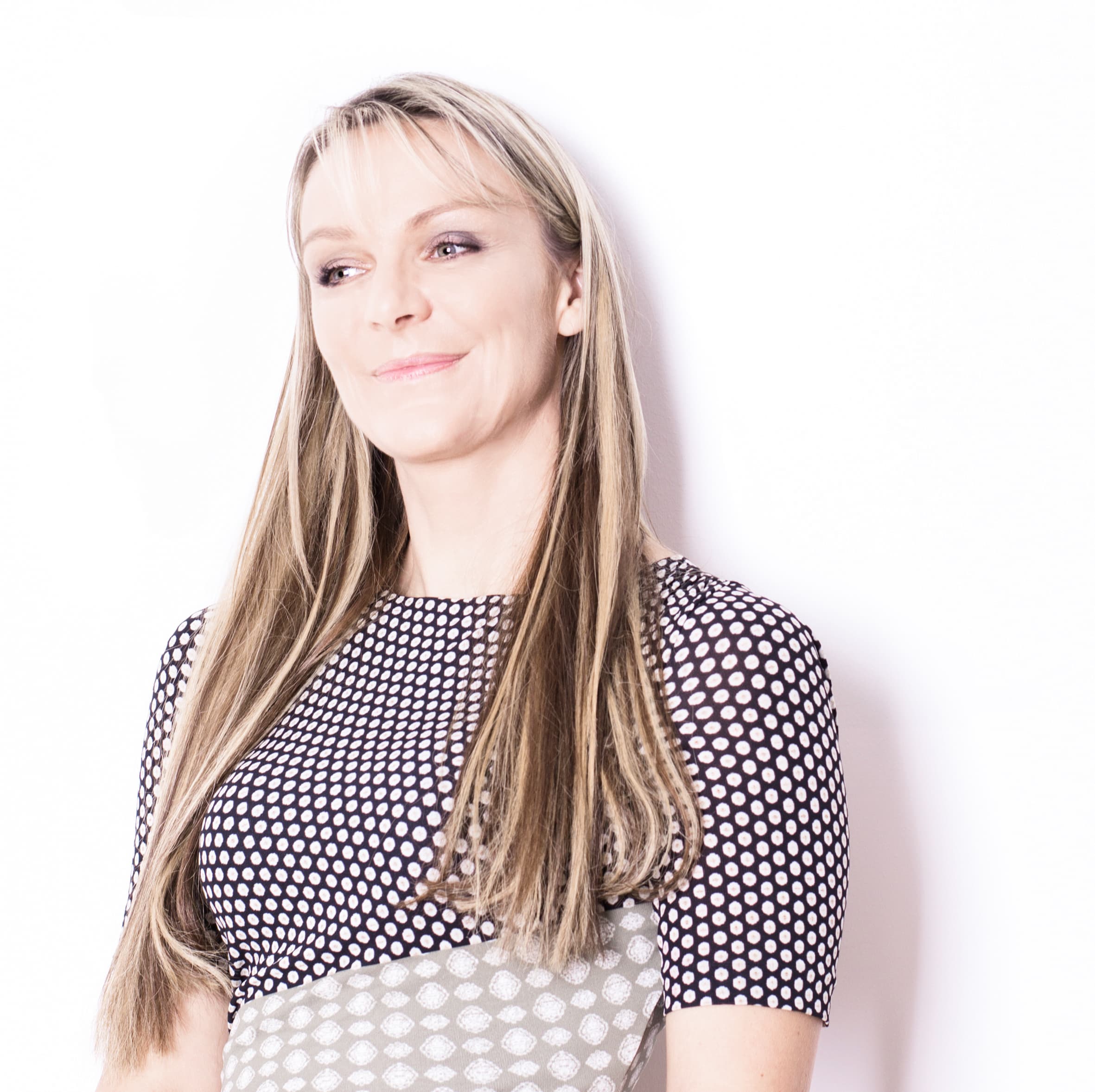
Janine works as a journalist, speaker and presenter. In 2015, she quit her job at RTL and has since focused on sustainability. She is the co-founder of futurewoman.de, a platform that gives female sustainability experts more media presence. Janine is the mother of one son and lives with her family in Cologne.
In their recently published book "Why Women Will Save the World - and Men Are Essential," the two use a depth psychological, representative study to show that feminine strengths are needed to master the great tasks of the future, such as the climate crisis.
F!F: Sustainability is similar to diversity: you urgently need to address the issues. But who really shows staying power?
Ines: Janine had already interviewed me as a psychologist in her first book on sustainability: How is it that people know everything, are enlightened - and still behave differently? That's when we first talked about the pleasure principle. A standard sentence that I say in this context: Sustainability is all the more sustainable the more pleasure it gives. If people don't associate it with sacrifice, then it can work. What does that mean for diversity? Men also have absolutely no desire to let women into leadership positions. Especially not if they have the feeling that they are so-called feminists who are always nagging. Building on this, we considered: How could what is typically feminine also be fun for men?
Janine: It is, of course, the easier path for many men to stay in their men's clubs. Where they, figuratively speaking, assign positions in the sauna. When women suddenly come in with all their femininity - and not with the approach of adapting to your standards in order to be allowed to play - then it's like an ice-cold shower. Many don't see that as a pleasure gain at all in the first moment, but as a disruptive factor. With our book, we want to show how much added value there is in the long run: new perspectives, new approaches and also a new way of working, working together. And thus achieve certain goals.
"It's not about against each other, it's only about with each other."
F!F: With your book title, you give women the big stage. How did men react to it?
Janine: I'm a tabloid journalist by trade, and Ines is just as clear from marketing: the main title has to pop. At the same time, we wanted to show in the subtitle: It's not about against each other, it's only about with each other. In the interviews we conducted with prominent guests for the book, I specifically asked the men how they felt about the title. And they said, "Sure, it provokes me at first. But I understood it while reading the book." Especially since we didn't really think in terms of biological genders. Rather, it's about the feminine principle, from which men benefit just as much and which they can apply just as much as women.
F!F: Feminine principle, masculine principle: Can you explain that?
Ines: In the preliminary research, we found that the clichés surrounding the feminine and the masculine still exist in people's minds today. In the discussions, the first thing that often came up was: "We're all equal a long time ago!" "Do we still have to talk about men and women?" "We only hire based on qualifications anymore." The fact is: people often use such phrases in order not to really engage with the topic of diversity. Because diversity means: there is not only one standard in this world. But we have found many areas where you can clearly see that the male standard dominates. So that women, for example, are embarrassed when they have their period, that they function cyclically and not linearly. Or that they say of themselves: I was too emotional again. We apologize for who we are!
"The feminine and the masculine exist as a narrative. We don't want to change that at all. Instead, we want the best of both principles."
F!F: Because women inevitably do worse when measured against the male standard?
Ines: Exactly. Whether it's the female body or the female voice that is trained deeper in the media so that it doesn't sound so high. So, we have shown in many areas that we have a male standard there, under which women and men suffer. Because we also had men in the interviews who said: I take care of my children! I also have this caring gene, which is always attributed to women. But something completely different is expected of me. I'm not even allowed to say that I would like to take three years of parental leave. For women, on the other hand, the prevailing male standard means: we have so many years of emancipation behind us, and these clichés are still there: too cyclical, too emotional, too caring, too complex, too complicated. We have taken up all these theses: Let's try not to get rid of them, but to ask what is actually good about them? Why do companies need this? Why does the world need this? For politics, climate and so on. That's actually the story: the feminine and the masculine exist as a narrative. We don't want to change that at all. Instead, we want the best of both principles. Because we need both to save the world.
"It's about equal recognition for the feminine approach."
F!F: So you turned the negative clichés "too emotional" or "too complicated" into feminine strengths. For example?
Janine: From "too complicated" we formulated the thesis: "Women think in more complex contexts and with more foresight." This is an absolutely necessary tool, especially when it comes to the climate crisis. At the same time, it often leads to us being portrayed like this: What kind of problems does she have again, shouldn't we just do it first and come to a quick solution? I find it interesting that, taken together, it makes a difference: You need someone on the team who thinks long-term and has an eye on what conflicts of interest there might be? We have an incredible number of conflicting goals, especially when it comes to climate protection. At the same time, you also need the driving forces who say, let's get into action now. In this respect, the best way out is in community. But it's about the equal recognition for the feminine approach.
F!F: You have tested your theses - taken together, the feminine principle - both in in-depth psychological individual interviews and in a representative study with executives.
Ines: Yes, with a great result! All the executives we interviewed in the individual interviews - after some of them initially said, oh, we don't need to talk about these topics anymore - agreed one hundred percent: The feminine principle with its specific strengths will save the world. And that was even shown in the representative study: 89 percent also said there, yes, the feminine principle will save the world. Now it's about implementing the whole thing with a lot of fun.
"It would also take enormous pressure off the men. Because they feel trapped in the role: I always have to go higher, faster, further."
F!F: Where did the male interview partners see added value for themselves?
Janine: Be it the consultants Patrick Bungard or Robert Franken, actually everyone said: Empathy, vulnerability is what the leaders of the future must have. So a very important strength of the feminine principle, which men absolutely have to let out if they want to be good leaders. It would also take enormous pressure off the men. Because they feel trapped in the role: I always have to go higher, faster, further. That's what everyone said in the interviews: They would be happy to redefine successful corporate management with more feminine strengths. So that they no longer have to serve the narrative: We are only great men if we are constantly making crazy great sales.
F!F: Do women reject this working environment? Because they don't feel so tough and robust?
Ines: That's exactly the male principle you describe. All the qualities that you supposedly need to get to the top are male. Women are soft and round. And not angular and robust. But the soft and round, that can do something too! In some places, the robust and the hard are simply not good for getting ahead. By the way, this also applies to "I don't trust myself to do that." That is always interpreted as women being so shy and reserved. No, that's a rethinking! Doubting is a core of the feminine principle and motivates us to become better. Belly too thick again, butt again... We look in the mirror very differently. That's why women in long-term partnerships are always slimmer than men.
"Doubts are primordially feminine and minimize the risk, even for men."
F!F: But when women don't immediately say "yes" to a promotion, it's quickly said that they don't want to.
Ines: Yes, but this hesitation doesn't mean "I can't do it." We have only defined: If you want to go up, you have to say immediately: I'll do it, I want to, I'll go through it. You can't say: I'm thinking carefully about the path, have I considered this, how do I get my children looked after, is it good for my health? If you say that, you don't want to anyway. Nonsense! Our additional thesis in the book is: Doubts are primordially feminine and minimize the risk, even for men. If we say: We don't doubt anymore, that would be male again. We don't want to be that! I am so passionate...Oh, now I apologize for that again.
F!F: Do women also apologize when they "only" work part-time and do "too much" unpaid family work instead of being proud of their achievements?
Janine: We also got great comments on this in the interviews. For example, from the entrepreneur Verena Pausder, who says: Actually, we don't have a social year as a woman, but a social life and all of it unpaid, basically.
"You don't have to think of 40 hours in five eight-hour days."
F!F: You can't push away care work, not everyone can or wants to delegate it. How do you as an entrepreneurial couple reconcile family and career, Ines?
Ines: I have four children, the oldest is already over 20, the youngest is twelve. But the issue of compatibility has always been a big one for my husband and me. Because I always wanted to practice my profession to the full and not go part-time, which would have been difficult as an entrepreneur. We thought about a model in advance, which I would recommend to everyone. Why don't we do it this way: you don't have to think of 40 hours in five eight-hour days. But, for example, alternating in six and ten hours. And six/ten means that one of us is always home at 2 p.m. and has a children's afternoon. We divided that up over the week. Every other day long and thus also time for a customer in the evening. And on the short days we always had time for Pekip, homework, swimming lessons. That works pretty well. Certainly also in an employment relationship. Flextime is allowed under labor law.
"This perfectionistic claim on all levels does not work."
F!F: A good example of how much relatively small changes can achieve.
Janine: I'm reminded of a quote, also from Verena Pausder: When cake has to be brought to school, it's only important that there is a cake. It doesn't have to be homemade. This perfectionistic claim on all levels does not work. If you start to distribute things over several shoulders and let go of this perfectionistic claim, then things will slowly fall into place. You don't need who knows what kind of financial support for that. You have to open your own mind: What are socially prescribed ways of thinking that I have allowed myself to be catapulted into? And what can I simply rethink?
F!F: The same applies to companies when it comes to more flexible working. You partly conceived your book while running or exchanged ideas via Whatsapp.
Janine: Most employment relationships are such that you can make agreements: What needs to be done in a certain period of time? Where and when I do it is completely irrelevant. Of course, you need different framework conditions in between. Sometimes I need the exchange, also the analog one, then I would like to come to the office, like to be in a nice environment. Sometimes I want to think alone and do it while running. I hope that we have gained new insights through Corona. In any case, our feeling was reinforced once again when writing: You can work anywhere in many professions and have good ideas.
F!F: Thank you for your thoughts.