publications, digitalization & media
Everyone is watching or dreaming away
lönneker & imdahl rheingold salon
An interview in the Süddeutsche Zeitung on the rheingold salon study commissioned by AGF Videoforschung to TV usage in the Corona crisis.
Contact person Ms. Kerstin Niederauer-Kopf, AGF Videoforschung
Here is the article from the Süddeutsche Zeitung or read the original article on TV usage during Corona in full:
Everyone is watching or dreaming away
Is more television being watched because of Corona? And above all: Are entertainment programs particularly in demand - or distraction? An amazing study is now available on this.
By Lisa Priller-Gebhardt
In the despair of house arrest, one rummages through the media libraries and comes across Girl Friends - Friendship with Heart from the 90s, with Mariele Millowitsch in the leading role. In a kind of modern fairy tale, butcher's daughter Marie leaves her village and her unfaithful friend and moves to Hamburg with her dog Biene. There, lingerie parties, a job as a data typist and a new love beckon. In the series, which the ZDF advertises as a "retro highlight," smoking and fondling is the order of the day. In contrast, Sturm der Liebe from the ARD media library is downright chaste. One thing they both have in common: they are audience hits in the current crisis. Binge-watching for advanced semesters.
In fact, the curfews are causing a boom in the media libraries of ARD, ZDF as well as Joyn (Pro Sieben Sat 1 / Discovery) and TV Now (RTL). According to a current analysis by television researchers, usage rose by around ten percent in March. The Netflix generation in particular, which has probably scoured all the interesting content on the US platforms, is now discovering the broadcasters' digital outlets for themselves. This is what AGF Videoforschung found out in a current analysis of "TV usage in the Corona crisis."
In general, more television is being watched again since the world is sick with corona. "In this uncertain time, in which many people have to stay at home, the need for information and distraction is growing," says Kerstin Niederauer-Kopf, Chairwoman of the AGF Executive Board. In March, the month in which drastic measures were taken in Germany to contain the epidemic, the viewing time of the general public averaged 244 minutes, a full 18 minutes above the same month last year and thus at a record level. The increase is all the more striking because the consumption of classic television has been declining for years. And surprisingly, the younger target groups in search of information are driving the increase in TV usage.
"Despite all the discussions about the 'lying press' and the declining importance of media, it is the major public broadcasters ARD and ZDF that are currently being targeted," says Niederauer-Kopf. According to the analysis, news conveys relevant information and "becomes the daily bracket and guiding principle for people."
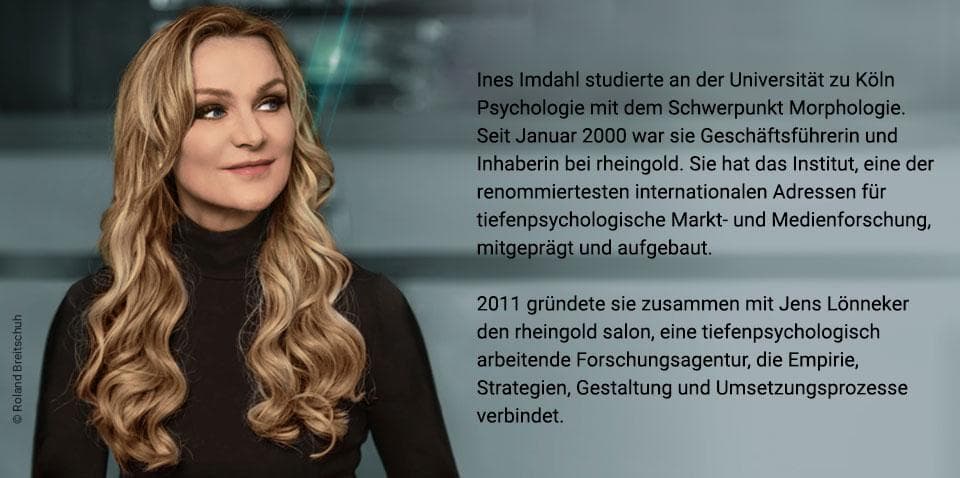
This observation should put many television managers in a good mood, as they believed that the younger generation had long been lost to the competition from Netflix & Co. "We spoke to young people who have actually watched the Tagesschau from beginning to end for the first time in their lives since the crisis began," says Ines Imdahl. She is the founder and owner of the Rheingold Salon market research institute and has supplemented the empirical usage data with an in-depth psychological analysis, as a "combination of qualitative and quantitative research," according to AGF. In addition, in-depth interviews were conducted and evaluated in different age groups.
Television helps to get the inner panic under control, says the psychological analysis
The list of winners is dominated by the Tagesschau in the 8 p.m. time slot. "The whole family gathers in front of the television to watch the news together. These receive a live character that we have not seen before," says Imdahl. Television helps to get the inner panic under control.
But not only the main evening news programs such as Tagesschau and Heute-Journal are finding their audience, but also the news-specialized channels N-tv, Welt and Tagesschau 24 are running as a permanent background noise for many viewers who work in their home offices. The 14 to 29-year-olds in particular are developing a new penchant for serious news during the crisis, instead of relatively arbitrary information searches on the Internet, according to the analysis - they now value quality journalism and clean research.
Not only news, but also entertainment programs are popular with the audience. "What young people miss most, namely dating, traveling, shopping and going out with friends, is now being sought on television," says the psychologist. It definitely has a stabilizing effect to see that reality is continuing. Docutainment formats such as Zwischen Tüll & Tränen, Shopping Queen and First Dates have become regular appointments for the 20 to 29-year-olds.
While the public broadcasters are primarily gaining ground in the news genre, the private broadcasters are seeing an increase in entertainment: shows in particular have recently been very popular with viewers - here, too, younger viewers are driving the increase in usage. In March 2020, the 14 to 49-year-olds watched an average of 579 minutes of programs such as Let's Dance, The Masked Singer, Kitchen Impossible and Germany's Next Topmodel - an increase of 20.2 percent compared to the previous year. Compared to the previous month of February 2020, the 14 to 20-year-olds in particular watched more: plus 32.8 percent.
And since millions of students have to learn at home, the usage figures for children's and educational channels have also risen sharply. ARD Alpha has restructured its program and is focusing on homeschooling - and shows learning television every day from nine to twelve o'clock. "The use of ARD Alpha has increased significantly, albeit at a low level," explains Niederauer-Kopf.
Losers in the AGF calculation are, unsurprisingly, the sports channels. In total, viewing time in March has fallen by about half. The Bundesliga is taking a forced break and no other competitions are taking place. Sports programs without live sport are like a papal audience without a pope. Sky, Dazn, Eurosport and Sport 1 are trying to fill the program gaps and are currently making extensive use of canned goods. They are showing Bundesliga classics in order not to lose the fans completely. But psychologist Imdahl says: "What you don't want to see under any circumstances now is a full stadium. That breaks the hearts of die-hard fans."