constitutional marketing & target groups, advertising & communication, science & theory, culture & society, media presence, business & economy, digitalization & media
Why brands should put the connecting element in the foreground now
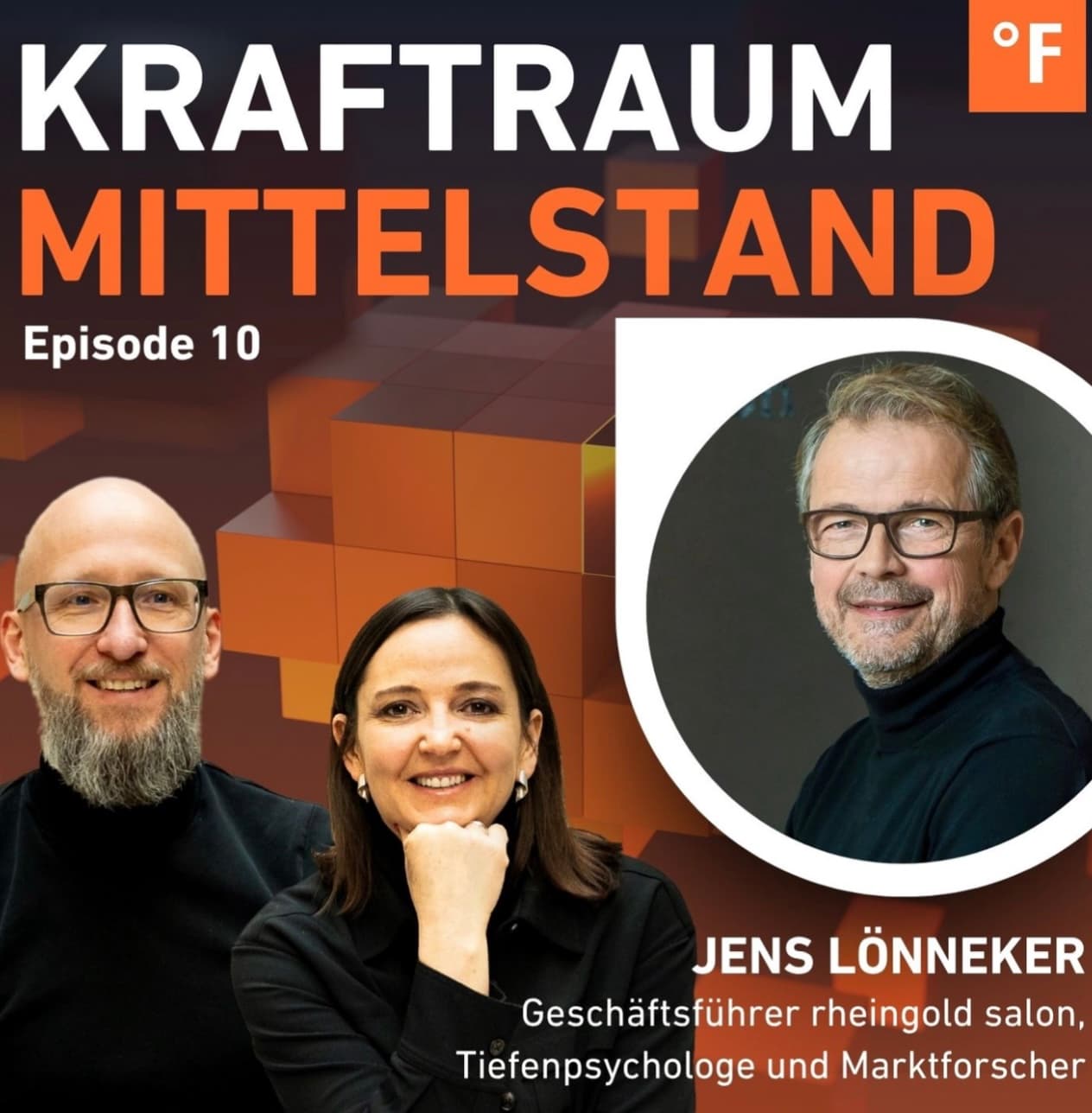
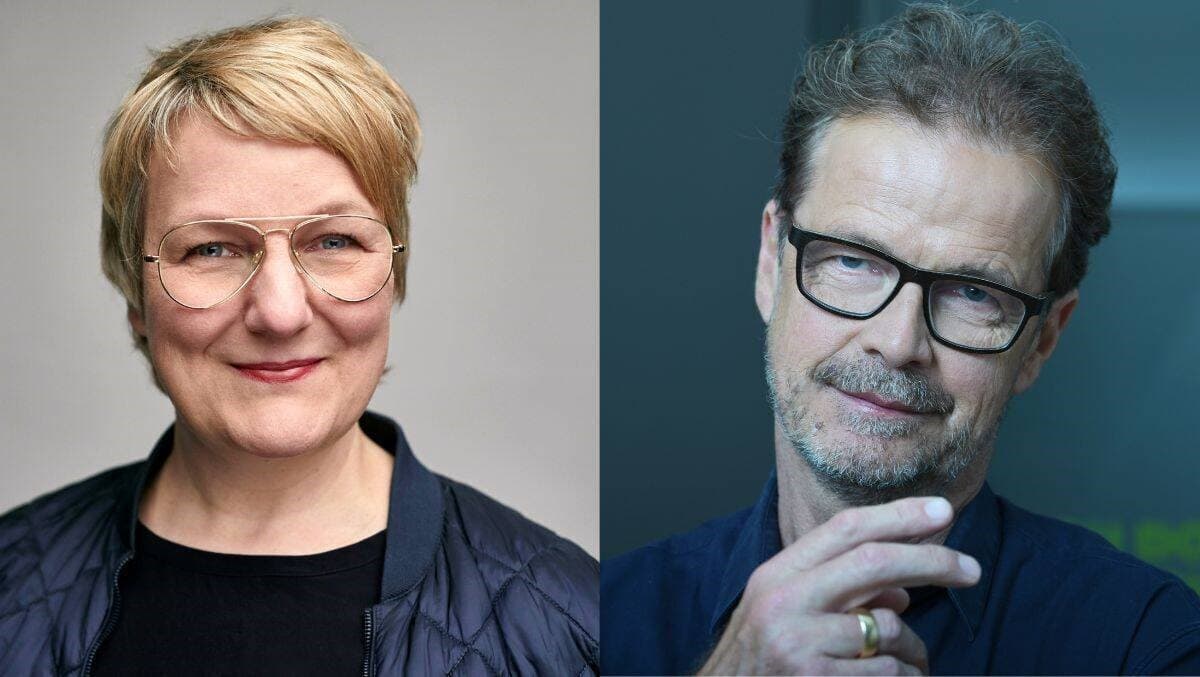
Jens Lönneker
Following the first Screenforce expert forum in 2024, Jens Lönneker was interviewed on the topic of “Media Democracy and Freedom of Opinion in Focus: How Brands Can Now Take Responsibility”. Here you can read the article in full. Click here to go to the Screenforce article page.
We then spoke to Jens Lönneker, Managing Director and founder of rheingold salon, about what depth psychology can contribute and how brands should communicate now in order to score points with their target audience. Mr. Lönneker, depth psychology is the foundation of your work. Please explain to us using a specific example what this is all about.
Jens Lönneker: Depth psychology makes it possible to better understand human behavior. For example, many people want the news to start with positive information. They criticize the fact that the media always puts negative world events in the foreground. In fact, all "Good News" attempts known to me have failed because they did not achieve the same reach as classic news. So there is a contradiction between what is desired and what is real - or between what is said and what is actually done, which is not so easy to understand.
And can depth psychology explain these contradictions?
Yes, such contradictions can be explained from a depth psychological perspective: Bad news, for example, always makes it clear what a culture does not agree with. What is classified as a breach of the rules, as criminal, as not okay? Everyone is interested in this because, on the one hand, we want to be protected from breaches of the rules of culture and society and, on the other hand, we sometimes have inclinations to commit breaches of the rules.
So bad news conveys: You are protected and you are not alone with your negative impulses, but you are right to think that you should not give in to them. Because you will be punished for it. Or, as one of my interview partners once put it: "That's right. If I don't read about murder and manslaughter in the morning, the day doesn't start well." Much of this is not conscious to us and can only be worked out using depth psychological methods. But one thing is certain: Good News cannot achieve all of this psychologically.
Politics and the church have lost importance as trust-building institutions for people, while - as your research results show - NGOs and brand companies can contribute to social cohesion. What could this look like in practice?
Unfortunately, the established media have also lost trust. One in four people in Germany is now media-averse and around 80 percent of these say that they feel abandoned by the system and politics. The Edelman Trut Barometer with 22,000 respondents worldwide also asked about divisive and unifying social forces for Germany. While government and the media are attributed more divisive forces, the opposite is true for NGOs and the business world. Other studies have then taken a closer look at brands and come up with high trust scores of 85 percent and more. This represents an immense opportunity for brand managers.
Brands as the last hope?
The social divergences and polarizations worry many people. They lead to a desire to re-establish more common ground and more community. Brands are already contributing to this - they usually just don't emphasize this because marketing has been trained for years to do the exact opposite: Namely, to highlight the uniqueness, the USP of brands, in order to differentiate them in the competitive environment. Today, however, they can score points for their brand precisely by making connecting offers. This is the direction in which we advise our clients.
Brands can only be successful if they convince many people. So they have always had something that many people see in the same way and that connects them. It is the paradox of success: to be something special that appeals to many people at the same time.
What do you advise CMOs?
Today, it is more important than it was a few years ago to also communicate the connecting aspects. We have looked at the major successful brands in this regard and have repeatedly come across such dimensions. Telekom has even integrated this into its claim "Experience what connects". But the connecting element does not necessarily have to be the topic itself. Because people can also agree on their desires. Luxury brands can benefit from this just as much as automobile brands such as BMW or Mercedes. The same applies in reverse to bargain hunting, which is currently very beneficial to discount stores. So the important thing is to change perspective: to put the connecting element of brands more in the foreground.
Can brands actually influence the values of a society? And if so, does this apply equally to all age groups and target groups?
Yes and no: Brands are not responsible for fundamental social trends and conflicts. But they can pick them up, comment on them, reinforce them, mitigate them and help to deal with them. Think, for example, of the "cheap is cool" campaign, which summed up the feeling of an era. Or brands such as Ben&Jerry's, Fritz Cola or Patagonia and Vaude, which are strongly committed to sustainability. Every brand has its environment and its target groups. It therefore makes sense to take a closer look at how the connecting moments of the brands can best be played out. This may of course be different for Dr. Oetker than for Tesla.
If you take a closer look at advertising campaigns, you will notice that many companies are picking up on the same topics: diversity, sustainability, body positivity, inclusion. Differentiation is hardly possible in this way. How do you find out which values suit a brand?
Well, these are also central trends of our time. It makes perfect sense for brands to pick up on this. Otherwise, they will quickly be perceived as no longer up-to-date. It only becomes problematic if you leave it at that and say: "We are now sustainable." That is not enough. People want to know how the issue of sustainability is being implemented in the brand's environment. What added value does this have for my chocolate, my car, my trip? Is it just supposed to ease my conscience or does it also have consequences for the product and service? The aim must always be more than just being up-to-date with the zeitgeist: Ultimately, there must be a concrete added value for the customer.
Final question: We live in volatile times. How important is it against this background for companies to sharpen their positioning right now?
Actually, sharpening positioning is a permanent task of brand management. However, there is a special situation at the moment: because the cornerstones of cooperation are eroding in Western societies. Brands are suddenly being asked where they stand: "Is your brand clearly against the AFD?" "How can you still publish Winnetou books today?" Or: "The Winnetou books are part of German literature: Therefore, they must continue to be published. Brands are therefore being drawn into social discussions and must develop strategies and narratives on how to deal with them. The connecting moments in particular can play a major role here.