publications, culture & society, business & economy
„Meeting stabilises business relationships“
lönneker & imdahl rheingold salon
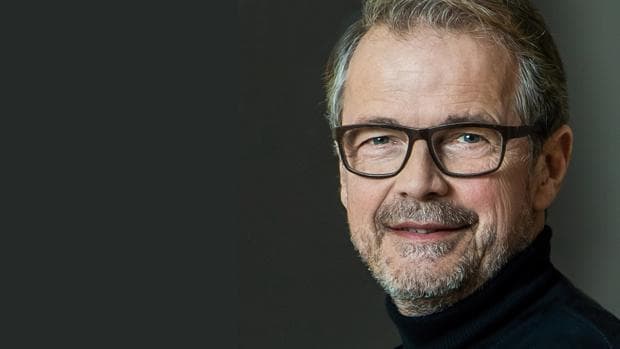
Jens Lönneker in an interview with the Lebensmittel Zeitung on the advantages of face-to-face work for business relationships. Read the full interview here:
Lack of contact in the pandemic has changed work. Distance also characterises external business contacts. Psychologist Jens Lönneker, Rheingold Salon, on loss of control, the longing for normality and the return to the office.
Mr Lönneker, how has distance affected business contacts?
The relationship changes due to the lack of proximity. If people don't meet in person at appointments, empathy is lost. The result: some customers sit on a rather high horse. He trusts the competence of the business partner less than was previously the case. The search for defects is increasing. Increasing correction loops lengthen processes. This is increasingly observed where partners had not already maintained intensive relationships before the Covid crisis.
How do you explain that?
That has to do with uncertainty. Various influences play a role. The world has become more individual, many perceive it as colder. Corona was a massive turning point. Everything was turned upside down. Then there's climate change. And now the war in Ukraine. People are shocked, afraid, feel powerless. They are trying to compensate for this loss of control and security. That is why even clearer data, clearer results and forecasts are demanded from a service provider or supplier. But that doesn't work. The world is different. Everything is becoming more complex. The uncertainty hits people in the home office. That exacerbates the situation.
Why is uncertainty increased in the home office?
Social ties provide support. But these were shut down for two years. Seeing and hearing are senses of distance, they do not create proximity. Feeling doesn't work at a distance. Only through proximity can security, friendship, connection and trust arise. The sensory experience of being in the same room is different than on the screen. The shared experience creates trust and gives a feeling of stability. Isolation, on the other hand, is depressing in the long run.
With the end of the home office obligation, employers can order employees back to the offices. Will everything be alright then?
There will hardly be a return to the pre-Corona way of working. Such a requirement par Ordre du Mufti would certainly not be a good idea. With the end of the home office obligation, management should develop a modern form of work.
Can employers argue that everyone is better off when they are present again?
No. A fixed framework does provide security. But that takes place in the pre- and subconscious. What we perceive more consciously is the freedom to determine how and where we work. It is difficult to restore a commitment to working together.
Don't people want to go back to the office?
That depends on the personal situation. Many have come to appreciate the home office: the time with the family, the elimination of travel times. This gain in freedom is perceived more intensely than the uncertainty described. Rationally, we want to maintain that. But there are of course others who preferred to work in the company even during the lockdown. Overall, there is a great longing for normality in the population. Employers need to find the right way to increase presence and take employee perspectives into account.
What could that look like?
A joint discussion about how collaboration will be designed in the future makes sense. Companies should not completely abandon the home office. A pure obligation to be present is not a solution, it must have added value. It makes sense to establish a fixed framework that enables closeness and shared experiences. But the team should be involved in how this framework is designed. The result can be a regular fixed meeting with mandatory attendance, but there may also be room for flexibility. In detail, this can only be developed in dialogue.
How can employees be encouraged to come back to the office - and not just on instructions?
In communication, employers should focus on the positive experience of direct interaction. Individual spirit can only be experienced if everyone spends time in the company. When you hear the gossip over coffee, experience the colleagues in their manners. This is an experience of truthfulness that strengthens cohesion and connectedness. We need to build on that. Nevertheless, the willingness will be different. If someone lives only five minutes away, the hurdle to quickly jumping into the office is lower than if someone has to overcome 250 kilometers and has worked wonderfully from home in the past two years.
Does it hurt if only part of the team is back on site?
That is possible. Then employees and companies have to be clear about priorities and draw appropriate conclusions. It may be that presence is essential for the task. It may also be that it continues to work at a distance.
Is the search for defects described at the beginning reversible? Will returning personal contacts strengthen empathy in business life again?
We need personal encounters, then more stability will return to business relationships. The social glue is also important for external contacts. Nevertheless, the search for control will increase. We will not return to face-to-face meetings exactly as it was before the crisis.
How do you have to adapt?
The process of collaboration needs to be accompanied more intensively. It works less well to submit an offer and later present finished results. Along the way, it is important to maintain communication with the customer and continuously involve him. In this way, we have to create trust "on the go" if it could not be built through grown personal proximity.