publications, advertising & communication, culture & society, digitalization & media
Why vaccine communication is going wrong.
Ines Imdahl
The topic of vaccination is a real drama in this country. While Israel, for example, will be fully vaccinated by the end of March, our new type of planned economy apparently won't even manage to immunize all older people by spring. In addition to the extension of the pandemic and the looming economic exodus, the willingness to get vaccinated will probably die out in a good half of the population by then. The good news: we need fewer and fewer doses for the remaining "volunteers".
Vaccination was controversial even before Corona. There were opponents and supporters. Covid 19 has further exacerbated the situation. According to an international YouGov study from December, only 59 percent of Germans are willing to be vaccinated. This shows how deep the rift goes through society.
Ratio is not enough when it comes to vaccination - instead, emotions are needed!
From a psychological point of view, the communication of the federal government and the type of media coverage are not entirely innocent of the declining willingness. This does not only mean the lack of, incomplete information on the subject of vaccination. People's behavior is much less controlled by "enlightenment" than we think. We know that smoking is harmful - and still continue to smoke. What is much more important is communication that also and above all convinces us on an emotional level. Then we use the logical "arguments" to post-rationalize our actions.
A truly moving campaign for vaccination has not yet been successful. The "official" vaccination campaign of the federal government can bring you to tears - like a small child during vaccination. A YouTube video that can hardly be surpassed in terms of aridity (yes, I think the word has to be invented for this) (or should one say undercut here?): News snippets from 2020 that contain no new news. The message remains questionable. The story anyway. How exactly does that work? Why exactly should you get vaccinated? What could you get out of it? The statement at the end can also be found in the "matching" print version - which is unknown to most people: "Germany is rolling up its sleeves". This means as much as: persevere again, endure, continue to do without. Endure something painful again. Not even formulated as a request or demand, but as a fact.
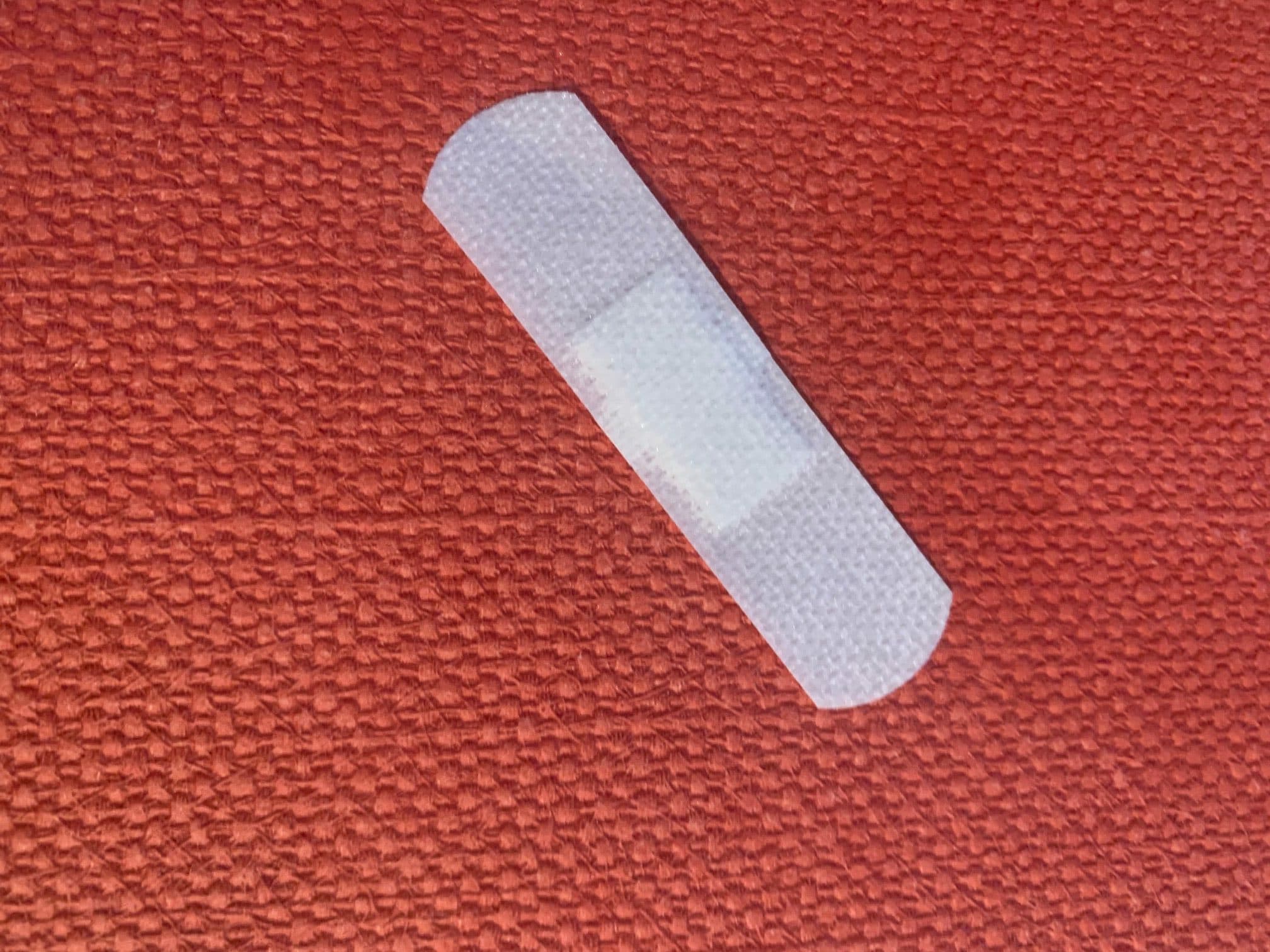
It is to be feared that the message of the campaign will not only not work, but will even be counterproductive. The effectiveness or at least the harmlessness of the corona vaccination is called into question by the unconscious message of the campaign itself: The plaster refers to the injury after the vaccination. Sure, that's "real" after the vaccination. But as communication it is much more far-reaching: The "injury" under the plaster fuels doubts, at least small ones. Is it really that harmless? Are there perhaps unwanted side effects? Is it right to voluntarily expose myself to another danger?
What's actually in it for me?
These - admittedly small - doubts could perhaps be dispelled if, yes IF, there was a balancing promise. What do you get from vaccination? What could be the advantage? Where is the joy, the pleasure that you gain when you get vaccinated? And that is the personal joy. Not only the abstract, rational, reasonable added value for society. You can create it, intellectually, in your head, clearly. You know it would be better if everyone was vaccinated. But for "me personally" being vaccinated has no advantage, no additional freedom, nothing. You are only asked to roll up your sleeves, let it happen to you. And to hope that it doesn't hurt. It is not only that there is no positive promise in the campaign, it even fuels the concern that vaccination will cause more "ouch" than it is worth, at least unconsciously. Dear Federal Government, this can be done better. It's a good thing that the campaign hasn't attracted too much attention so far.
This attention in the vaccination communication is available elsewhere. And it shows that things can get even "worse". In the public and media discussion, the attempt to link the vaccination to a small advantage - for example, earlier, greater freedom to travel or visits to the cinema - is nipped in the bud. Of course, it is problematic that on the one hand only older people get the vaccine and those who do not have access to it continue to be denied the right to complete freedom of movement. This fuels envy and the idea was not thought through to the end.
However, this would be a psychological incentive to take a possible, small risk. If you get something out of it, you gain something. And not only possibly, albeit improbably, could harm yourself.
What the placebo effect has to do with the current communication on the subject of vaccination.
Instead, the negative spiral continues: In the news and in the media, there are more frequent reports of how many people, including those from the nursing sector, do not want to be vaccinated. This is also communication. Because you cannot not communicate. It is even the central communication about vaccination. Communication that fuels further doubts. If so many people have doubts, even those who should actually know, is there perhaps something to it? This form of communication is like the package insert with the side effects: the more you read about it, the more you have the feeling that the whole thing could be harmful. Dr. Martin Andree proved that this is really the case in his habilitation in the book "Placebo Effects": Side effects occur 5-6 times more often when you read the package insert. According to this, the most dangerous thing about the drug is the package insert. This is also a result: Communication about the negative consequences of vaccination leads to negative consequences of vaccination. First in the heads - then increasingly in reality.
So we need desire, perspective and joy - so that a run on vaccination works. Maybe this will succeed until there is finally enough vaccine for everyone. The less that is communicated about the "harmfulness", the better we will get through the vaccination.
Click here for the LinkedIn discussion